
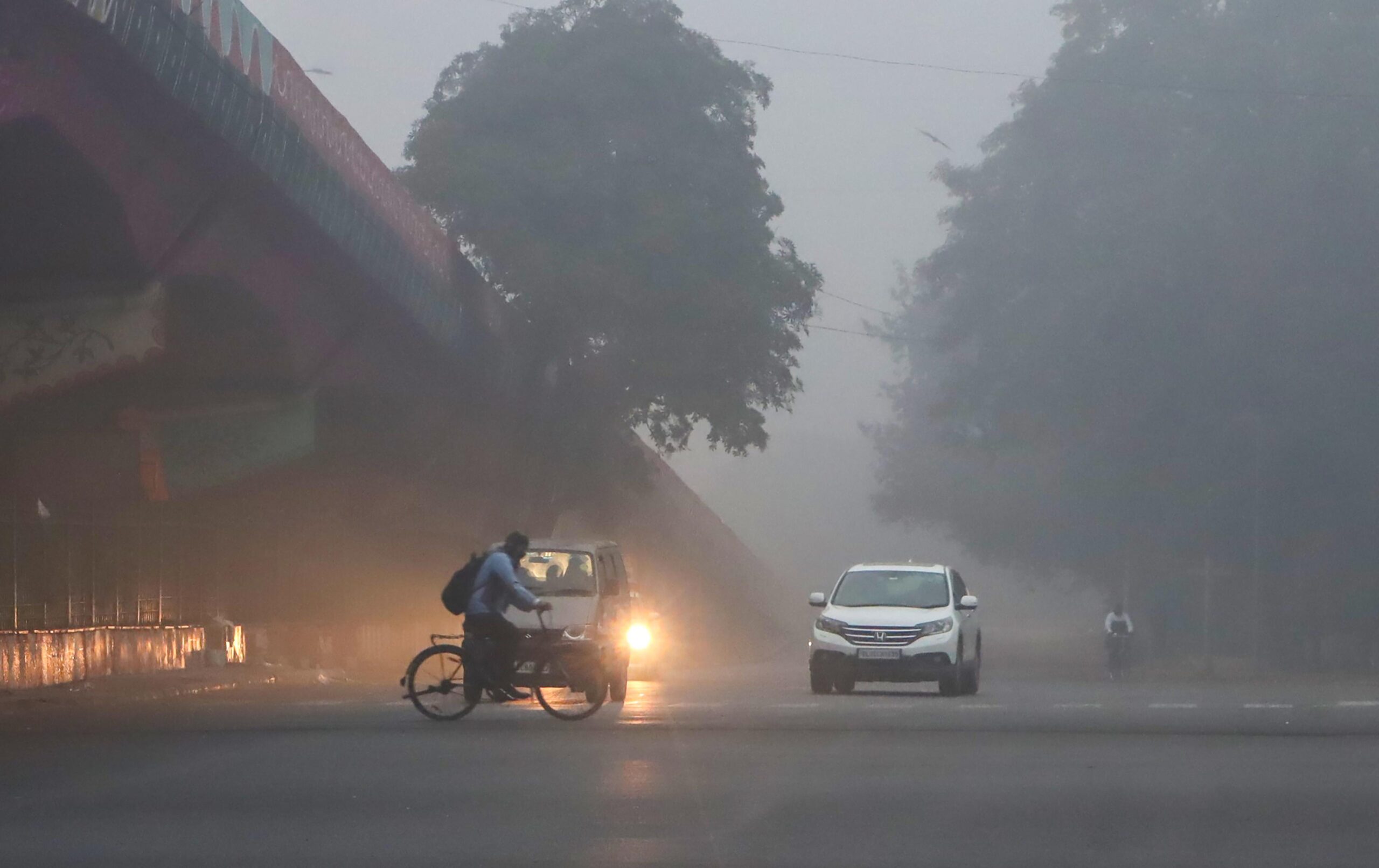
The National Capital Region is currently experiencing one of its harshest winter phases of the season. Cold wave conditions, dense fog, and poor air quality have combined to make daily life increasingly difficult for residents. Early mornings and late evenings have turned uncomfortable, with temperatures dipping sharply and visibility dropping across several areas.
Cold wave impacts daily routines and livelihoods
For daily commuters, the cold has brought additional challenges. Office-goers have been seen leaving homes earlier to avoid delays caused by fog-affected traffic. Street vendors, security guards, and daily wage workers have been among the most affected, as long hours outdoors have become physically demanding. Many have reported reduced earnings as customer movement has slowed during extreme cold hours.
Fog disrupts transport and road safety
Dense fog has continued to affect road, rail, and air movement in and around NCR. Reduced visibility during morning hours has led to slower traffic flow and longer travel times. In some areas, minor accidents have been reported due to poor visibility. Train delays have also been observed, causing inconvenience to passengers traveling to and from the region.
Air pollution adds to health concerns
Alongside the cold, air quality has remained a serious concern. Although occasional strong winds have brought brief relief, pollution levels have largely stayed in the poor category. Doctors have reported an increase in patients complaining of breathing difficulty, cough, throat irritation, and chest discomfort. Children, elderly citizens, and people with existing respiratory conditions have been advised to take extra precautions.
Hospitals see seasonal rise in patients
Government and private hospitals across NCR have reported a seasonal rise in cases related to respiratory infections, joint pain, and viral illnesses. Medical experts have stated that cold weather weakens immunity, making people more vulnerable to infections. Preventive measures such as warm clothing, proper hydration, and limited exposure to polluted air have been strongly recommended.
Authorities issue advisories and precautionary measures
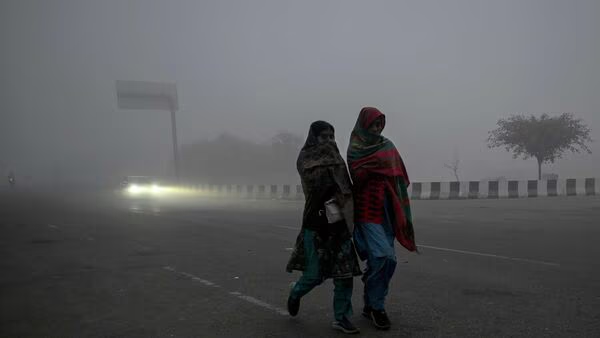
Weather and health advisories have been issued by authorities urging citizens to avoid early morning exposure, especially during peak fog and pollution hours. Schools have adjusted schedules in some areas, while traffic police have appealed to drivers to follow safety guidelines. Pollution control agencies have stated that restrictions may be re-imposed if air quality worsens.
Residents adapt with caution and resilience
Despite the difficult conditions, NCR residents have been adapting with resilience. Masks, scarves, and layered clothing have become common sights. Indoor workouts, remote work options, and flexible schedules have been adopted by many. Families have also been seen taking extra care of elderly members and young children during this period.
Hope for gradual improvement remains
Meteorological experts have indicated that weather conditions may gradually stabilise in the coming days. However, long-term solutions to pollution and urban climate challenges continue to be discussed. For now, NCR residents remain focused on getting through the season safely.