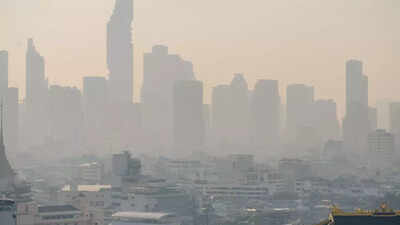
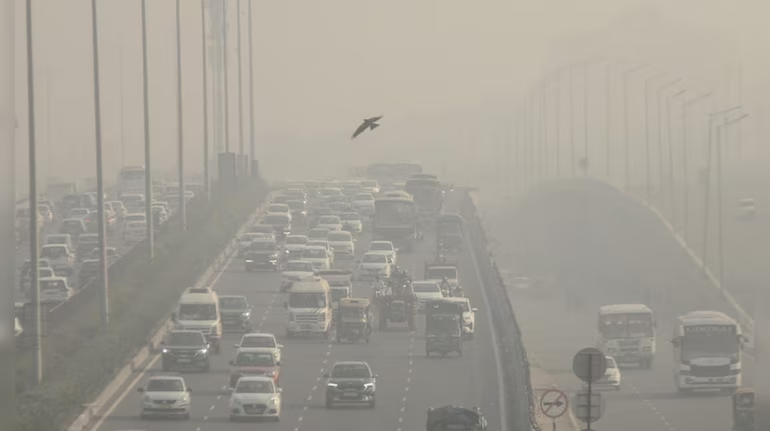
Delhi woke up to another day of toxic air, but this time, something unusual grabbed everyone’s attention. At 7 AM, global air-quality platform IQAir (Switzerland) recorded Delhi’s AQI at a horrifying 506, while India’s official body CPCB (Central Pollution Control Board) showed below 399 for the same moment.
The massive gap triggered a wave of confusion—and a bigger question:
●If AQI can soar to 900, why does CPCB always stop at 500?
●Whose data should citizens trust—India’s or global monitors?
Let’s break down the science, the system, and the secrecy behind India’s AQI numbers.
Why AQI in India Never Crosses 500 — Even if Pollution Is Much Higher
According to NDTV, Dr. Gufran Beig, Chair Professor at NIAS, explains:
“AQI above 400 is already hazardous. At AQI 500 or 900, the health impact is the same. Showing higher numbers can create unnecessary panic.”
But experts disagree.
Environmental analyst Sunil Dahiya argues that there is no scientific basis for capping AQI at 500:
“If we can calculate beyond 500, why hide it? Public has a right to know the real severity.”
Meaning —
◆The sensors can measure higher
◆But the system won’t show it
◆Because India’s AQI scale is capped at 500
So yes, both readings may be “correct” — just based on different systems.
What Exactly Is AQI and How Is It Measured?
AQI converts complicated pollution data into a simple number (0–500) so the public can understand the air quality.
India measures 8 pollutants to calculate AQI:
PM2.5
PM10
Ozone
Nitrogen Dioxide
Sulphur Dioxide
Carbon Monoxide
Ammonia
Lead
Whichever pollutant is highest becomes the overall AQI.
Colour Codes That Decide How Dangerous the Air Is
AQI also uses colour bands to signal health risk:
AQI Range Colour Risk Level
0–50 Green Good
51–100 Yellow Satisfactory
101–200 Light Orange Moderate
201–300 Dark Orange Poor
301–400 Red Very Poor
401–500 Maroon Severe
Once the air enters the Severe (401–500) category, it is dangerous even for healthy people — and extremely deadly for vulnerable groups.
This is why CPCB claims there is no need to display numbers beyond 500.
CPCB vs WHO: The Standards Are Worlds Apart
CPCB “safe limit” for PM2.5: 60 µg/m³ (24-hour average)
WHO safe limit: 15 µg/m³
That’s a 4× stricter limit globally.
This means Delhi is “safe” by Indian standards long before it is safe by global standards — causing the mismatch in AQI values.
So, Whose AQI Should You Trust?
CPCB AQI = policy-based, capped at 500, averages 24 hours
International AQI platforms = real-time spikes + uncapped values
Experts say:
●For health, trust real-time data
●For government action, CPCB is used
Until India updates its AQI scale, this gap will continue.