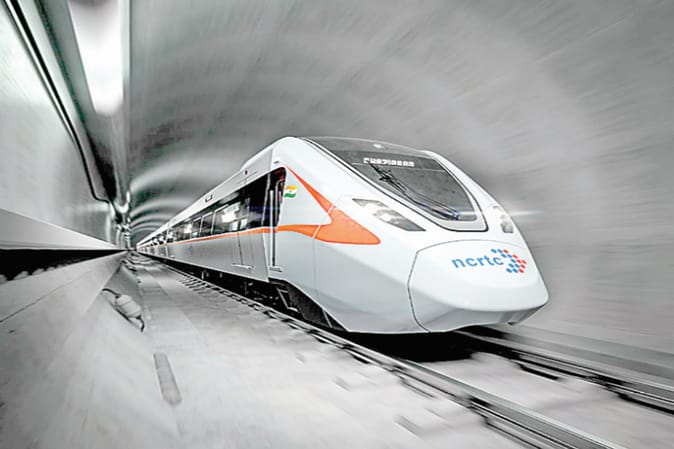
In a major boost to regional connectivity, the Haryana government has approved the alignment of a 64-km Gurgaon–Faridabad–Noida Namo Bharat corridor, a high-speed transit project designed to transform daily travel across the National Capital Region (NCR).
The corridor will feature six metro stations and two integrated RRTS-cum-metro hubs, enabling both rapid intercity travel and convenient intra-city commuting on a single route.
Dual-Service Corridor: High Speed + Local Travel
The project, proposed by the National Capital Region Transport Corporation (NCRTC), will run both:
◆Namo Bharat (RRTS) high-speed trains for intercity travel
◆Metro services for shorter city trips
This hybrid model mirrors the Delhi–Meerut RRTS system, where metro services operate within city limits on the same infrastructure.
Key integrated hubs in Gurugram:
IFFCO Chowk
Sector 61
Additional metro-only stations proposed:
Sector 29
Millennium City Centre
Sector 52
Wazirabad
Sector 57
Sector 58/61
Route, Connectivity & Infrastructure Integration
The 64-km corridor will span multiple urban zones:
◆52 km in Haryana, covering Gurugram and Faridabad
◆Route begins at IFFCO Chowk and extends toward Gwal Pahari
◆Passes along Golf Course Road Extension
Connects with major transit systems
Planned interchanges include:
◆Delhi Metro Yellow Line at Millennium City Centre
◆Rapid Metro at Sector 61
◆Proposed Gurugram Metro network
◆Delhi Metro Violet Line in Faridabad
The project is also expected to create seamless connectivity between IGI Airport and the upcoming Noida International Airport in Jewar, significantly improving regional mobility.
Cost, Planning & Environmental Considerations
Estimated at around Rs 15,000 crore, the corridor has been designed to serve both existing and emerging residential sectors while avoiding ecologically sensitive zones such as Tau Devi Lal Biodiversity Park.
Officials said the Detailed Project Report (DPR) will be prepared soon, after which construction timelines will be finalised.
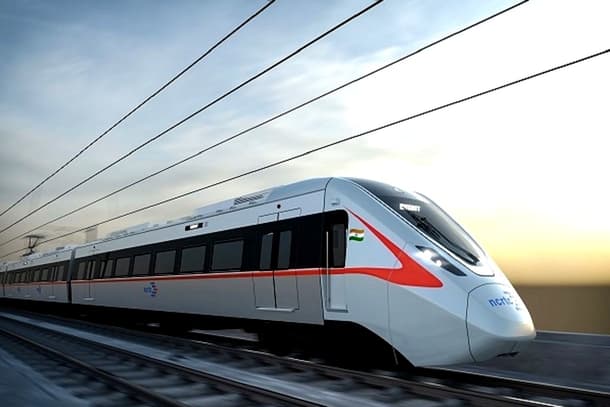
A Long-Term Solution to NCR Traffic Congestion
Authorities believe the corridor will:
●Reduce road congestion across NCR
●Cut travel time between major cities
●Boost economic activity and employment
●Support future urban expansion
●Promote environmentally sustainable transport
With rising population pressure and traffic demand in Gurugram and Faridabad, the project is being positioned as a critical infrastructure investment for the region’s future.