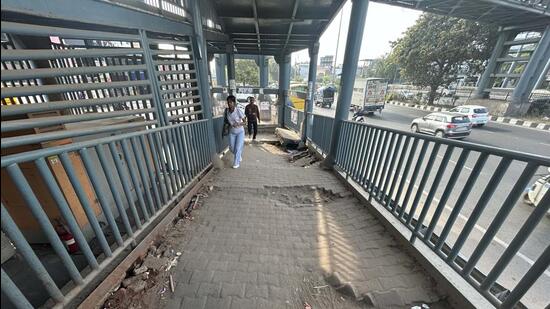
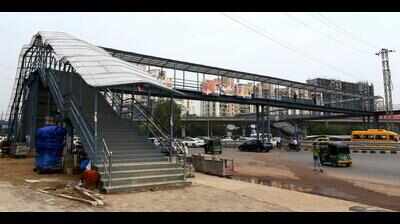
Pedestrian crossings along the busy Delhi-Gurgaon Expressway are set for a significant redesign, with lifts and staircases replacing the long ramps and escalators that have defined most foot overbridges (FOBs) on NH-8.
The National Highways Authority of India (NHAI) has decided to adopt a lift-based access model for new foot overbridges after years of complaints over misuse, vandalism and poor maintenance of existing infrastructure.
Why the Redesign?
Officials said long ramps were frequently misused by two-wheelers, causing structural damage. Escalators, meanwhile, have remained non-functional at several locations due to theft, vandalism and lack of upkeep.
At key junctions such as IFFCO Chowk, Signature Tower and Rajeev Chowk, escalators have been out of service for extended periods. Missing roof panels, broken structures and steep staircases have made pedestrian movement unsafe, forcing many commuters to risk crossing high-speed traffic.
Bridges to Be Dismantled for Mega Projects
The revamp coincides with the planned dismantling of foot overbridges at three major junctions:
IFFCO Chowk and Signature Tower: To make way for the proposed Delhi-Gurgaon-Bawal RRTS corridor.
Rajeev Chowk: For construction of an interchange linking the Delhi-Gurgaon Expressway with the Sohna elevated corridor.
Officials said the removed bridges will be reconstructed later with the revised lift-based design.
Maintenance Dispute Continues
Maintenance of existing FOBs has been a long-standing issue between NHAI and GMDA. While NHAI built the structures, it has argued they primarily serve local traffic and should be maintained by GMDA. The matter remains unresolved, contributing to delayed repairs.
Experts Raise Concerns
Road safety experts caution that replacing escalators with lifts may not fully resolve usability challenges. Mechanical systems require consistent power supply and maintenance, and if upkeep remains poor, lifts too could fall into disrepair.
They also point out that long walking distances to access bridges discourage pedestrians, suggesting that broader design and accessibility considerations must accompany the revamp.
As infrastructure upgrades gather pace along the expressway, the success of the new foot overbridge model may ultimately depend less on design and more on sustained maintenance and accountability.