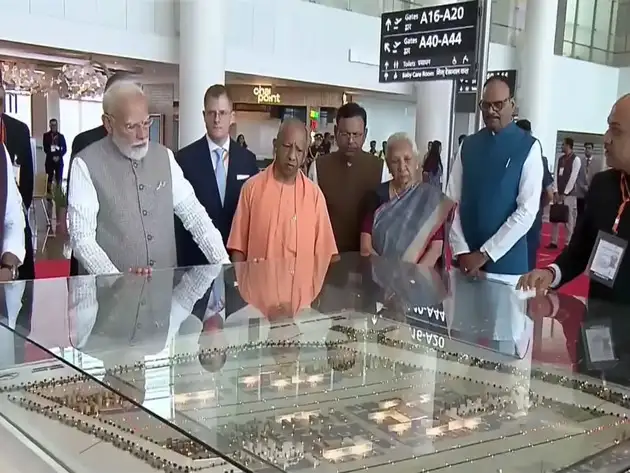
India’s aviation landscape marked a historic milestone as Prime Minister Narendra Modi, along with Chief Minister Yogi Adityanath, inaugurated the much-awaited Noida International Airport in Jewar.
The inauguration is being seen not just as the launch of an airport, but as the beginning of a new economic and connectivity era for North India.
Strategically located around 80 km from Delhi, the airport is set to become a major aviation hub for the National Capital Region (NCR), easing congestion at Delhi’s IGI Airport and boosting regional growth.
Phase 1 Ready: Built for Scale and Speed
The first phase of the airport has been completed with world-class infrastructure:
● Runway Length: 3,900 meters
● All-weather operations capability
● Advanced navigation and air traffic systems
● Passenger handling capacity: ~12 million annually
This is just the beginning. The airport is planned to be developed in five phases, which will significantly expand its capacity in the coming years, making it one of Asia’s largest aviation hubs.
Future projections suggest exponential growth in passenger traffic, cargo handling, and global connectivity.
Connectivity Boost for Entire Western UP
The impact of the airport goes far beyond Noida.
Regions expected to benefit include:
●Agra
●Mathura
●Aligarh
●Meerut
●Etawah
●Faridabad
The airport is expected to:
●Reduce travel time
●Increase trade and tourism
●Strengthen logistics and cargo movement
This positions Western Uttar Pradesh as a major economic growth corridor.
Massive Public Participation: A Unique Inauguration
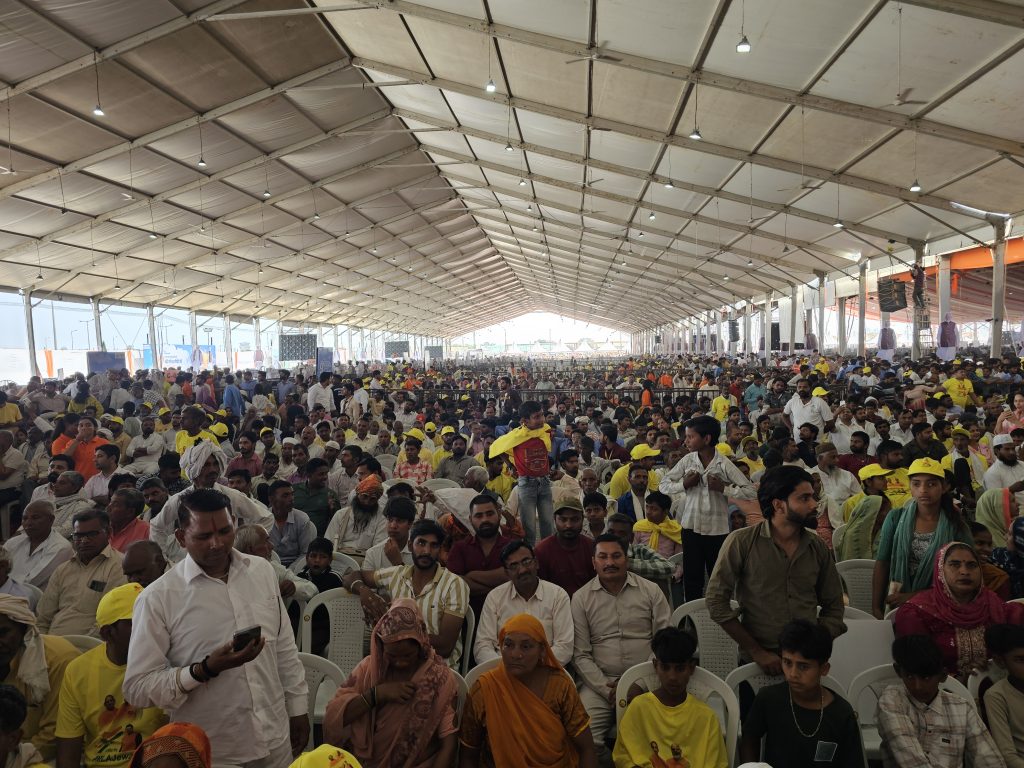
The inauguration ceremony witnessed an overwhelming response, with over 2 lakh people attending the event.
In a unique and symbolic gesture, Prime Minister Modi invited the crowd to participate in the inauguration by switching on their mobile flashlights.
The visual of thousands of lights illuminating the venue created a powerful moment, turning the event into a collective public celebration rather than just a formal ceremony.
Aviation Growth: India’s Expanding Sky
During the event, Prime Minister Modi highlighted India’s rapid aviation growth:
● Airports increased from 74 to 160+ in recent years
● Plan to develop 100 more smaller airports
● Aircraft maintenance (MRO) shifting to India from abroad
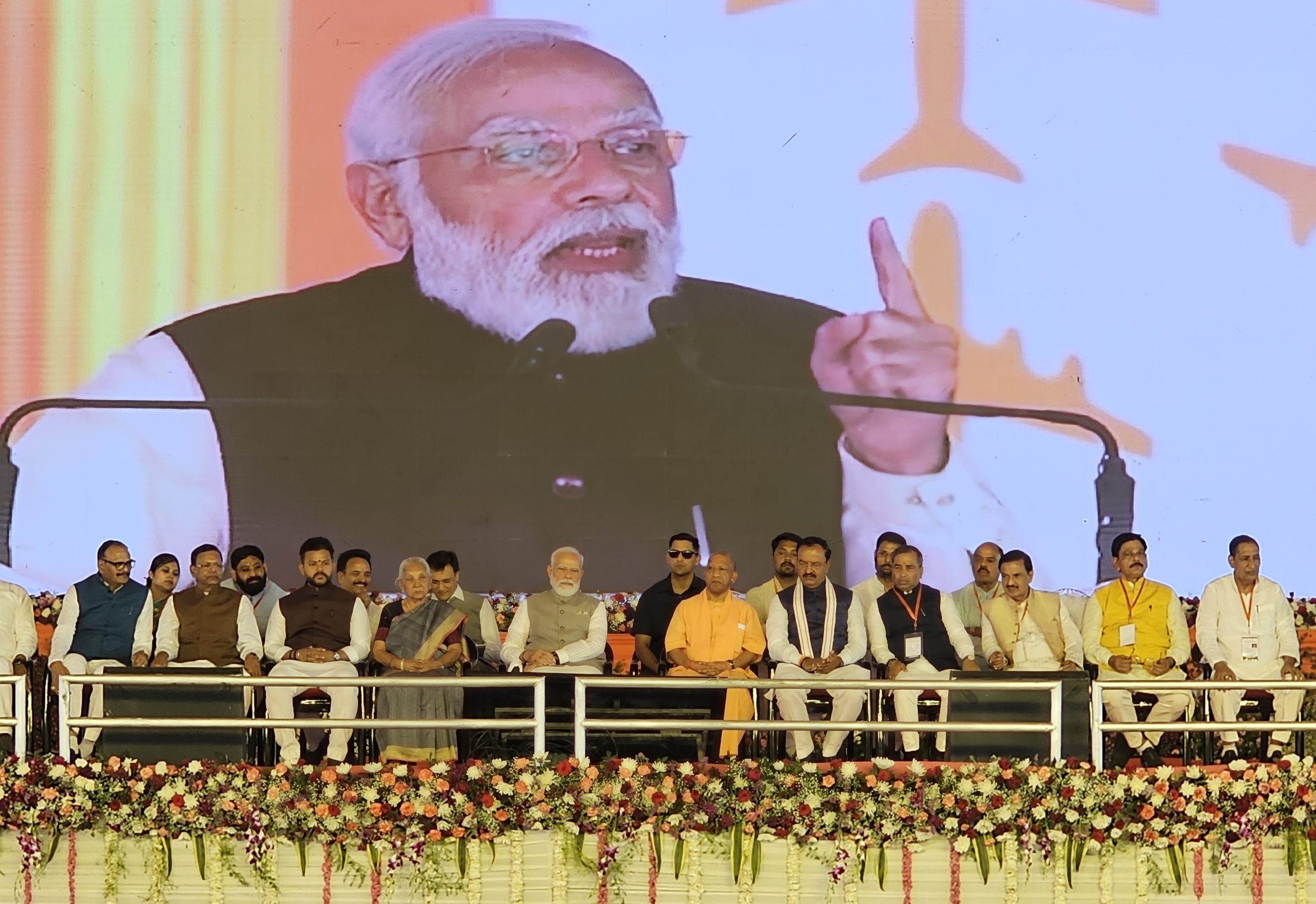
He also mentioned that at full capacity, one flight could take off every 2 minutes from Jewar Airport, reflecting the scale of planning and future demand.
● This aligns with India’s ambition to become a global aviation hub.
● Massive Infrastructure & Traffic Management
Given the scale of the event, authorities implemented extensive arrangements:
●Multi-layered security deployment
●Strict surveillance across the region
●Traffic diversions on Yamuna Expressway and Noida Expressway
●Temporary ban on heavy vehicles for nearly 16 hours
These measures ensured smooth execution of the high-profile inauguration while minimizing disruptions.
Economic Impact: Jobs, Investment & Growth
The Noida International Airport is expected to generate:
●Thousands of direct and indirect jobs
●Increased foreign and domestic investment
●Growth in real estate, logistics, and tourism sectors
Chief Minister Yogi Adityanath emphasized that the project was made possible with the support of farmers who provided over 13,000 acres of land, highlighting the role of local participation in large-scale development.
The airport is already attracting global companies and investors, creating a positive economic environment.
A Vision Beyond Infrastructure
This project is not just about flights—it represents a larger vision:
●Stronger regional connectivity
●Balanced economic development
●Modern infrastructure aligned with global standards
The airport stands as a symbol of: “Developed Uttar Pradesh”
● “Developed India”
The inauguration of Noida International Airport marks a defining moment in India’s infrastructure journey.
From handling millions of passengers to transforming entire regions economically, the airport is set to redefine how North India connects with the world.
As flights prepare to take off, so does the promise of:
●Faster growth
●Better connectivity
●Stronger economic momentum