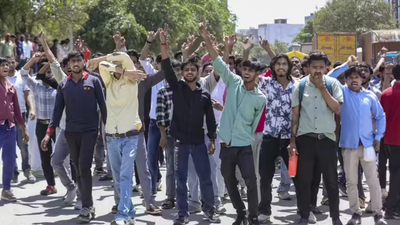
The ripple effect of Noida’s recent labour unrest is now spreading beyond industrial units. In a fresh development, workers at a private university in Dadri, Greater Noida, staged a protest demanding higher wages and better working conditions, signaling that the anger among workers is far from over.
The protest, which saw hundreds of workers gathering outside the university gate, comes just days after violent clashes shook Noida’s industrial belt over similar wage-related issues.
From Factories to Campuses: Protest Wave Expands
The demonstration marks a significant shift — from factory floors to institutional spaces.
Workers, including men and women staff, raised slogans and blocked access near the university entrance, pressing for a salary hike and improved benefits. The protest remained largely peaceful, but its timing and intensity reflect a growing frustration among the workforce across sectors.
According to officials, the agitation was brought under control after discussions with the protesters, and normalcy was restored within hours.
Core Demands: Salary Hike and Fair Compensation
At the heart of the protest lies a familiar demand — better pay.
Workers are not only seeking an increase in basic salaries but also demanding:
●Higher overtime compensation
●Fair working conditions
●Recognition of rising living costs
Many protesters pointed out that despite recent announcements by the government, the revised wages still fall short of what they consider a “livable income.”
This mirrors the broader sentiment seen across Noida and nearby regions, where workers have been demanding salaries in the range of ₹18,000–₹20,000 per month.
Backdrop: Violence, Wage Gap and Growing Anger
The Dadri protest cannot be seen in isolation.
Just days earlier, Noida witnessed large-scale protests by factory workers that turned violent — with incidents of stone-pelting, arson, and police action.
The unrest was largely fueled by:
●Wage disparity with neighboring Haryana
●Rising inflation and cost of living
●Long working hours with low pay
The situation escalated to the point where authorities had to deploy heavy police force and conduct flag marches to restore order.
Government Response: Wage Hike, But Not Enough
In response to the unrest, the Uttar Pradesh government announced an interim wage hike of around 21%, effective from April 1.
While the move was aimed at calming tensions, it has not fully addressed workers’ concerns.
Many labour groups argue that the revised wages are still inadequate, especially in high-cost urban regions like Noida and Greater Noida, where rent, transport, and daily expenses continue to rise sharply.
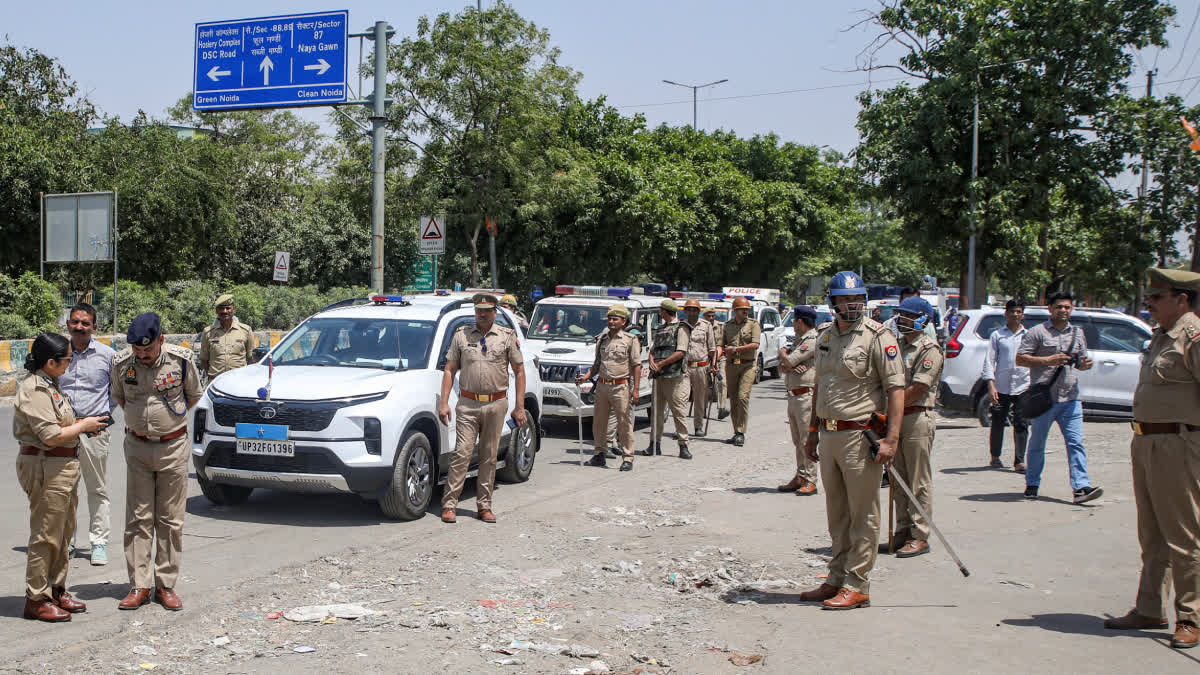
Heavy Security, Zero Tolerance for Chaos
Authorities are now on high alert.
Following the recent violence, police presence has been significantly increased across Gautam Buddh Nagar. Continuous patrols, foot marches, and surveillance are being carried out to prevent any escalation.
Officials have made it clear that while peaceful protests will be allowed, any attempt to disturb law and order will invite strict action.
A Warning Signal for Industry and Administration
The protest at the university highlights a deeper issue — labour dissatisfaction is no longer confined to one sector.
From factories to institutions, workers across the region are now voicing similar concerns. Experts believe this could evolve into a larger, coordinated movement if grievances remain unaddressed.
The situation also raises concerns for industries and institutions operating in the region, as continued unrest could impact productivity, investment, and overall economic stability.
The Bigger Picture: A Region on Edge
What began as a wage dispute in Noida’s factories is now turning into a wider labour movement across the NCR belt.
The Dadri protest is not just an isolated incident — it is part of a growing wave of discontent that reflects deeper structural issues in wage policies and labour conditions.
With tensions still simmering, the coming days will be crucial in determining whether dialogue prevails — or the unrest intensifies further.