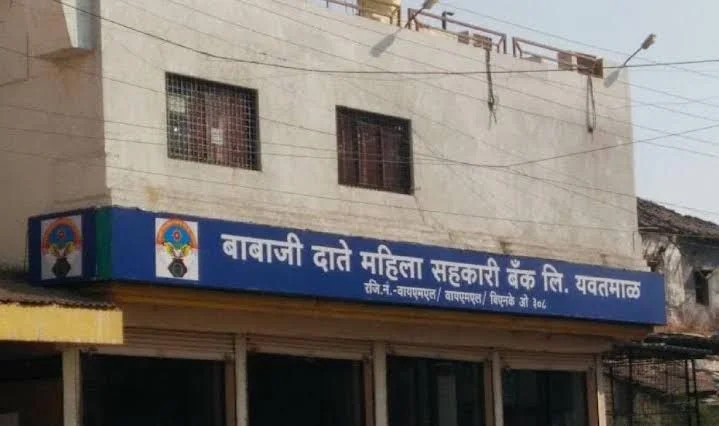
Yavatmal The Enforcement Directorate has intensified its investigation into the alleged ₹242 crore bank fraud linked to Babaji Date Mahila Sahakari Bank in Maharashtra’s Yavatmal district. The agency conducted searches at nine locations across the district under the Prevention of Money Laundering Act. During the operation, investigators seized several important documents, including property-related papers. The agency is now examining the alleged financial links between bank officials, employees, borrowers and other persons connected with the case.
The case stems from multiple FIRs registered at Avdhutwadi Police Station in Yavatmal. The FIRs contain allegations of irregularities involving former bank officials, employees and borrowers. Based on the findings that emerged during the investigation, the matter was subsequently brought under the scope of a money laundering probe.
According to the investigating agency, Babaji Date Mahila Sahakari Bank was registered under Section 9(1) of the Maharashtra Cooperative Societies Act, 1960. The Reserve Bank of India cancelled the bank’s licence in 2022. A special audit commissioned by the state government subsequently pointed to serious irregularities in the functioning of the bank.
The special audit and investigation have alleged that the bank’s then chief executive officer, chairman, directors and other officials, in alleged collusion with borrowers, valuers and auditors, sanctioned loans without adequate collateral. In several cases, loans were allegedly disbursed without properly assessing the borrowers’ repayment capacity. The agency has alleged that the loans were subsequently used in violation of the bank’s bylaws, lending policy and RBI guidelines.
The investigation has also allegedly uncovered a network involving bank officials and borrowers through which funds were transferred. The agency suspects that a portion of the loan money was used for personal purposes, cash withdrawals and the practice of ‘evergreening’, in which fresh loans are used to adjust or repay earlier loans. The alleged transfer of commissions into accounts linked to bank officials is also being examined.
According to the agency, dummy or fake loan accounts were allegedly opened using the identities of some existing borrowers. Investigators also found indications of alleged manipulation in the valuation of mortgaged properties. The sanctioned loan amounts were allegedly diverted elsewhere after being released. Property-related documents seized during the searches are expected to help investigators examine these aspects of the case.
The agency has already filed a chargesheet in the matter. However, the investigation into documents and financial transactions identified during the latest searches is continuing. Investigators are examining the flow of the alleged loan proceeds, including the accounts to which the money was transferred, its subsequent use and the role of various individuals associated with the bank.
The alleged ₹242 crore fraud has raised questions about loan-sanctioning procedures, property valuation, internal controls and the protection of depositors’ funds in the cooperative banking sector. As the investigation progresses, the agency is also examining the alleged laundering of proceeds of crime and possible links between the funds and properties connected with the case.
Further action is expected to follow the detailed examination of the documents, financial records and other material seized during the searches. The investigation will determine the alleged roles of the individuals involved and trace the movement and utilisation of the funds under scrutiny.