

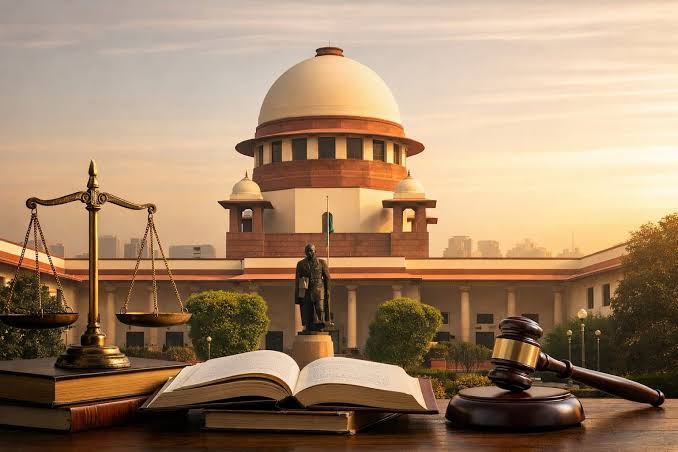
The Supreme Court has taken a strong stance on the administrative autonomy of the National Company Law Tribunal and the National Company Law Appellate Tribunal, observing orally that the Ministry of Corporate Affairs has completely hijacked these bodies. A bench comprising Chief Justice Surya Kant, Justice Joymalya Bagchi, and Justice V. Mohana noted during a hearing that executive control has severely undermined the operational independence of these corporate dispute settlement forums. The court advocated granting full appointment powers to the tribunal chairpersons while initiating regular permanent recruitments through the Union Public Service Commission or the Staff Selection Commission.
Contractual Staff Move Apex Court Against Abrupt Dismissal
The matter came before the top court on a petition filed by contractual employees serving across the tribunals. Appearing for the petitioners, Senior Advocate Meenakshi Arora argued that these workers had been discharging their duties for the past six years and should not face summary dismissal. She informed the judges of apprehensions that the existing staff would be removed on November 1 or 2 to make way for a fresh workforce brought in through an independent private contractor. Senior Counsel Arora contended that the tribunals’ existing recruitment rules contain express provisions for regularisation, making any wholesale displacement arbitrary and violative of Articles 14 and 16 of the Constitution.
Bench Flags Serious Risks Posed by Private Contractors
Expressing grave concern over the executive grip on these judicial bodies, Chief Justice Surya Kant remarked that the ministry seeks to retain total control over the tribunals, calling the state of affairs extremely unfortunate. The Chief Justice observed that contractors operate with their own agendas and show little regard for the needs of judicial or technical members. Emphasising that hiring authority must rest squarely with the heads of the tribunals, the bench underscored the systemic vulnerabilities arising from private vendor arrangements.
The bench voiced strong reservations regarding temporary hires, pointing to past administrative breakdowns. Chief Justice Surya Kant recalled an earlier episode from Bombay where contractual personnel absconded with original case records, forcing authorities to register a First Information Report. The bench observed that contractual workers frequently harass judicial members, while also raising red flags over potential manipulation involving technical members. The court called for disbanding reliance on private agencies and replacing such stopgap personnel with institutionally competent staff.
Judicial Roadmap for Deputation and Regular Appointments
Taking into account the broader public interest, the Supreme Court issued formal notice on the petition and outlined a dual-phase reform strategy to overhaul the administrative apparatus of the tribunals. As an immediate short-term measure, the court recommended bringing experienced officers on deputation from government departments to address ongoing operational requirements. For long-term institutional stability, the bench directed the implementation of phased, permanent appointments conducted via the Union Public Service Commission or the Staff Selection Commission.
The apex court reiterated that tribunal heads must be vested with comprehensive powers over staff administration and recruitment frameworks. The sharp remarks from the bench underline the urgent necessity of structural administrative reforms within India’s corporate adjudication framework. Transitioning away from vendor contracts toward institutional channels such as the UPSC and deputation is seen as essential to restore judicial dignity, secure institutional independence, and ensure the impartial adjudication of company disputes.

