

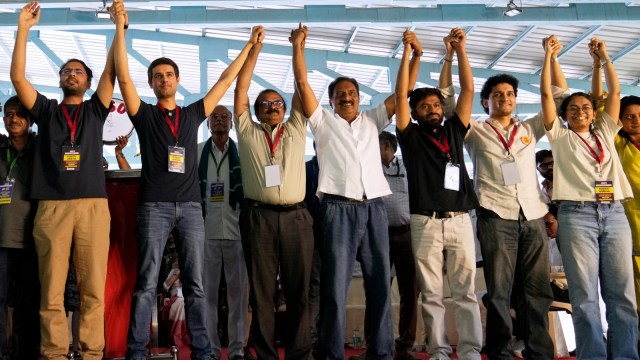
NEW DELHI: Union Minister Jitendra Singh has triggered a major political controversy by alleging that key functionaries of the Cockroach Janata Party (CJP) received unauthorised financial assistance from overseas donors and hostile organisations based in Pakistan and the United States. The political outfit firmly rejected the charges on Thursday, terming them baseless, while questioning the integrity of statements issued by individuals holding senior constitutional and political posts. Addressing media personnel in Bengaluru on November 3, Singh asserted that investigators held sufficient evidence establishing that campaign leaders were drawing money from foreign-funded non-governmental entities and deep-state operatives working to manufacture anti-India narratives. The minister singled out campaign associates Abhijeet Dipke and Ashutosh Ranka, claiming Dipke collected resources from American contributors, whereas Ranka received direct financial backing from Pakistani politicians. However, Singh did not make public any specific bank statements, transactional trails, or formal documentation during his interaction.
CJP Demands Verifiable Proof and Accountability
Responding swiftly through social media platform X, the CJP mounted a sharp counter-offensive against the Union Minister, decrying the lack of institutional accountability when high-ranking officials level grave accusations without documentary verification. The organisation stated that when ministers make unscrutinised claims without consequence, public confidence in senior constitutional offices suffers widespread erosion. The party further asked why central authorities continued to engage with its representatives if its leadership genuinely maintained illicit links with handlers across Pakistan or the United States. Taking to social media, Ranka highlighted the inconsistency between allegations of hostile foreign backing and parallel government engagement with the outfit. In an additional satirical intervention, Ranka noted that the administration might as well attribute domestic governance concerns, including paper leaks, public school closures, electoral controversies, and persistent unemployment, to the neighbouring country.
Opposition Voices Demand Release of Evidence
The political confrontation quickly expanded to draw reactions from regional leaders, with Karnataka Home Minister Priyank Kharge openly questioning the credibility of recurring foreign-funding accusations made by the Bharatiya Janata Party. Kharge demanded that the ruling establishment present concrete evidence rather than relying on uncorroborated allegations to target political opponents, noting that accusations of external influence demand verifiable facts rather than unsubstantiated claims. The confrontation has pushed the issue of external political funding and suspected cross-border intervention back to the centre of national debate. Observers note that while allegations involving illicit funds from abroad carry severe national security implications, statutory rules dictate that such claims be accompanied by formal forensic trails detailing actual donors, receiving bank conduits, and declared channels of movement.
Regulatory Scrutiny and Rising Political Stakes
The intensifying exchange underscores rising official scrutiny over political mobilisation efforts, with central agencies stepping up monitoring under the Foreign Contribution Regulation Act. Union government spokespersons have reiterated that foreign entities must not be permitted to influence domestic political discourse through unregulated capital flows. Conversely, opposition groups and civil campaigns argue that national security classifications are increasingly deployed to delegitimise public dissent without judicial scrutiny. With neither party yielding ground and no formal transactional records officially published by Thursday, the standoff between the Union Minister and the CJP promises to remain a contentious flashpoint across upcoming parliamentary and state legislative sessions.

