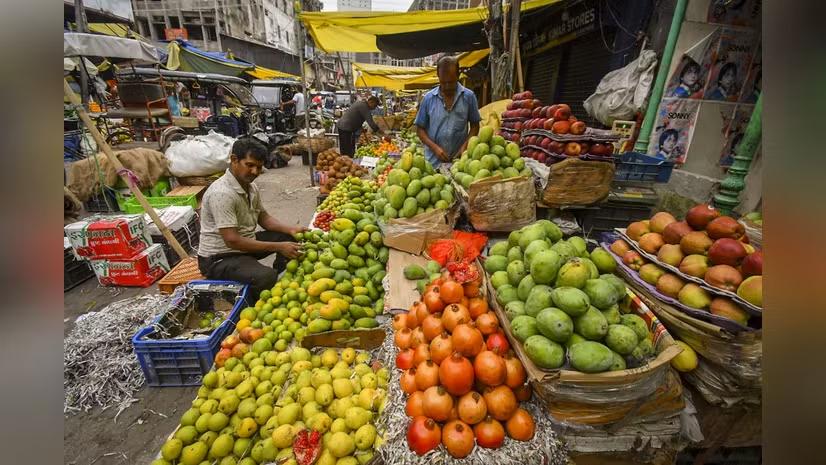
In a major food safety move, the Food Safety and Standards Authority of India has issued a fresh directive to all states and Union Territories, warning against the illegal use of chemical ripening agents in fruits.
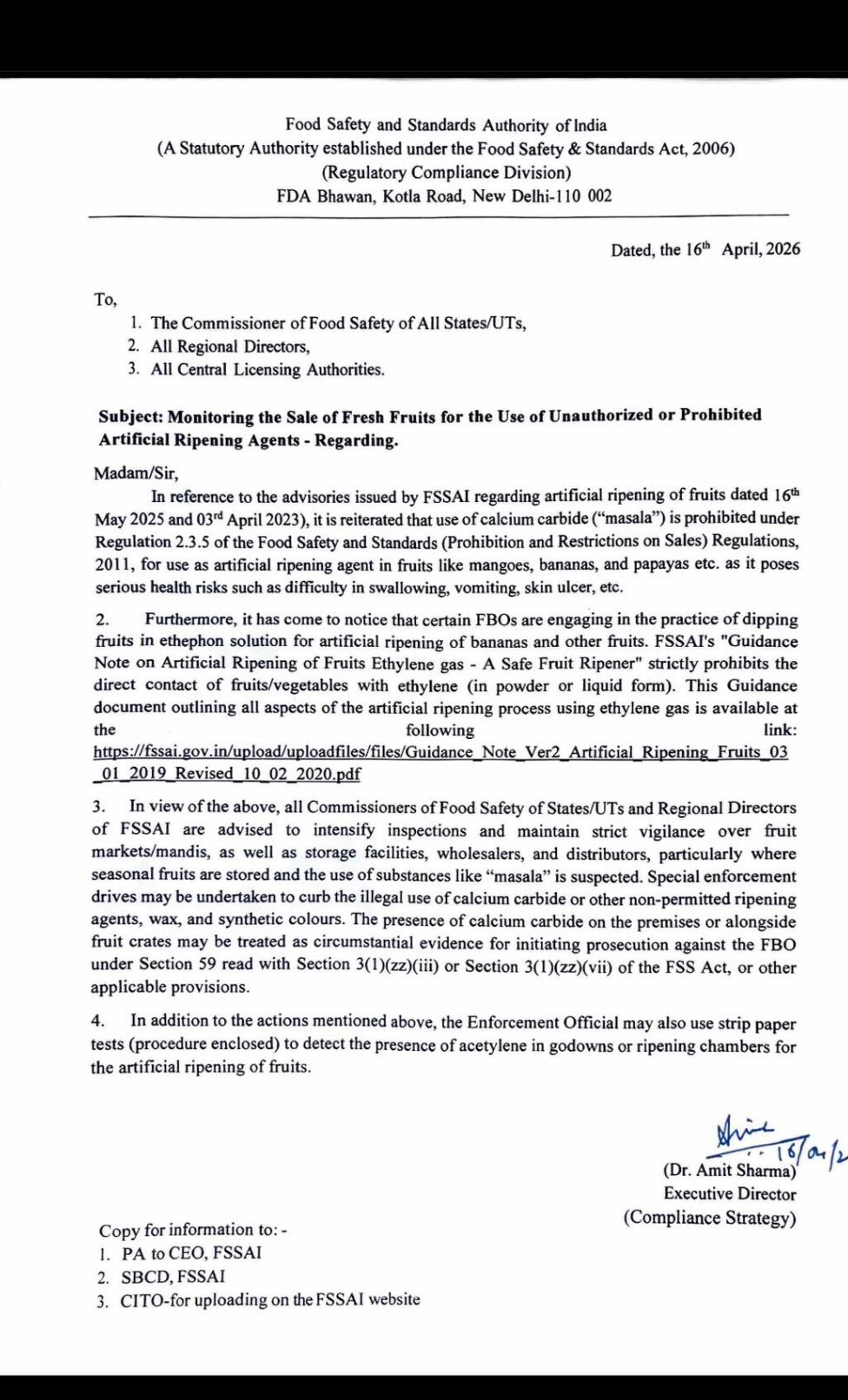
The advisory, dated April 16, 2026, calls for intensified inspections and strict enforcement across markets, storage facilities, and supply chains to curb the use of banned substances like calcium carbide (commonly known as “masala”).
Why This Warning Matters
FSSAI has reiterated that calcium carbide is strictly prohibited under food safety regulations due to its severe health risks.
Consumption of fruits ripened using such chemicals can lead to vomiting, skin irritation, breathing issues, and even long-term health complications.
The regulator has also raised concerns over the misuse of ethylen-based solutions in unsafe forms, which are being used improperly by some operators to speed up ripening.
Crackdown Ordered Across Markets and Supply Chains
The directive instructs food safety commissioners and enforcement officials across India to step up surveillance in mandis, warehouses, and distribution networks.
Special focus has been placed on:
●Seasonal fruits like mangoes, bananas, and papayas
●Storage and ripening facilities
●Wholesalers and transport chains
Authorities have been asked to launch targeted enforcement drives wherever suspicious substances are detected.
Strict Legal Action and Evidence Collection
FSSAI has made it clear that the presence of banned chemicals like calcium carbide at any premises can be treated as circumstantial evidence for prosecution under the Food Safety Act.
Enforcement teams have also been advised to use scientific testing methods, including strip tests, to detect illegal ripening gases in storage units and ripening chambers.
A Bigger Pattern of Food Safety Concerns
This advisory comes at a time when multiple incidents of food adulteration — from fake honey to chemical paneer — have raised alarms across the country.
The latest directive signals that authorities are now moving towards stricter monitoring and faster action to prevent unsafe food from reaching consumers.
Consumer Awareness Becomes Crucial
While enforcement is being strengthened, experts stress that consumers must remain cautious about unnaturally ripened fruits, which often appear overly bright, soft, or uniformly colored.
The focus now is not just on regulation, but also on building awareness to reduce demand for chemically treated produce.