

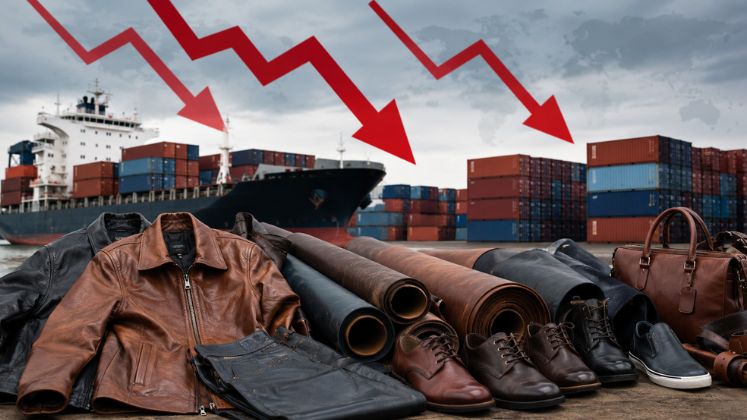
NEW DELHI — India’s leather and footwear export sector is grappling with a severe prolonged downturn, recording a drop of approximately Rs 9,700 crore over the past decade despite state incentives, export relief programs, and a competitive exchange rate against the US dollar. Shipments fell from roughly Rs 49,560 crore in the 2015-16 financial year to around Rs 39,900 crore in 2025-26. The contraction has shown little sign of reversing, with outbound shipments dipping another three percent year-on-year during the five months ending September 2026. This ongoing slump has pushed the government’s ambitious export target of Rs 1.26 lakh crore increasingly out of reach, placing immense strain on an industry that sustains the livelihood of roughly 4.4 million workers, including a workforce where two out of every five are women.
Surging Sea Freight and Domestic Connectivity Gaps
Exporters have been hit hard by escalating geopolitical unrest in West Asia, which has sent international ocean freight charges soaring. Shipping a standard 40-foot container from Nhava Sheva to New York has surged from Rs 1.51 lakh to nearly Rs 10.08 lakh, while the cost to transport cargo from Nhava Sheva to Jebel Ali has jumped from roughly Rs 16,800 to Rs 3.78 lakh. These sharp logistical cost increases have eroded operating margins and driven up final prices in overseas markets, with persistent transshipment delays introducing heavy uncertainty into delivery timelines.
Domestically, freight bottlenecks continue to compound the pressure on overseas dispatches. Because large mother vessels cannot dock directly at most Indian ports, ships are regularly forced to route cargo through foreign transshipment hubs. Industry stakeholders note that while Kerala’s Vizhinjam port possesses the natural draft required for deep-sea vessels, it still requires comprehensive infrastructure development to operate at full capacity. Furthermore, a substantial share of leather production takes place in tier-two and tier-three cities, leaving exporters burdened by high inland haulage costs and transit delays. Trade representatives stress that direct rail links from industrial hubs to maritime terminals are essential to curtail turnaround schedules and lower overall expenditures.
State Concentration, Labor Shortages, and Rising Wages
Uttar Pradesh remains the linchpin of India’s leather manufacturing, accounting for nearly 46 percent of the country’s total overseas shipments. In response to mounting headwinds, the state government is reviewing constraints faced by local manufacturers, ranging from raw material availability and financing bottlenecks to marketing and transit problems. The footwear segment, which constitutes about 40 percent of total leather turnover, has absorbed the brunt of this disruption, as elevated production costs and intense overseas competition compress export order books.
Rising labor expenses at major processing clusters have placed an additional burden on operational viability. In Mumbai’s Dharavi, home to thousands of small manufacturing enterprises, a growing shortage of skilled personnel has lifted hiring costs by 30 to 40 percent, with specialized craft positions seeing wage gains exceed 50 percent. For small and micro workshops with limited pricing leverage, these higher pay demands have made it difficult to keep production costs sustainable.
Global Competition and the Widening Market Deficit
Subdued consumer appetite in European retail centers and the rapid adoption of cheaper synthetic alternatives have further curtailed Indian leather orders. Although India ranks as the world’s fifth-largest leather goods exporter, it continues to lose ground in major global buying markets. An industry study released in October 2026 revealed that Indian footwear holds a meager 1.7 percent share in the import markets of Free Trade Agreement partner countries, whereas China commands a commanding 28.4 percent footprint. Without urgent policy intervention focused on port connectivity, rail freight corridors, skill generation, and unit production costs, industry stakeholders caution that millions of artisan households risk facing compounding economic distress.

