

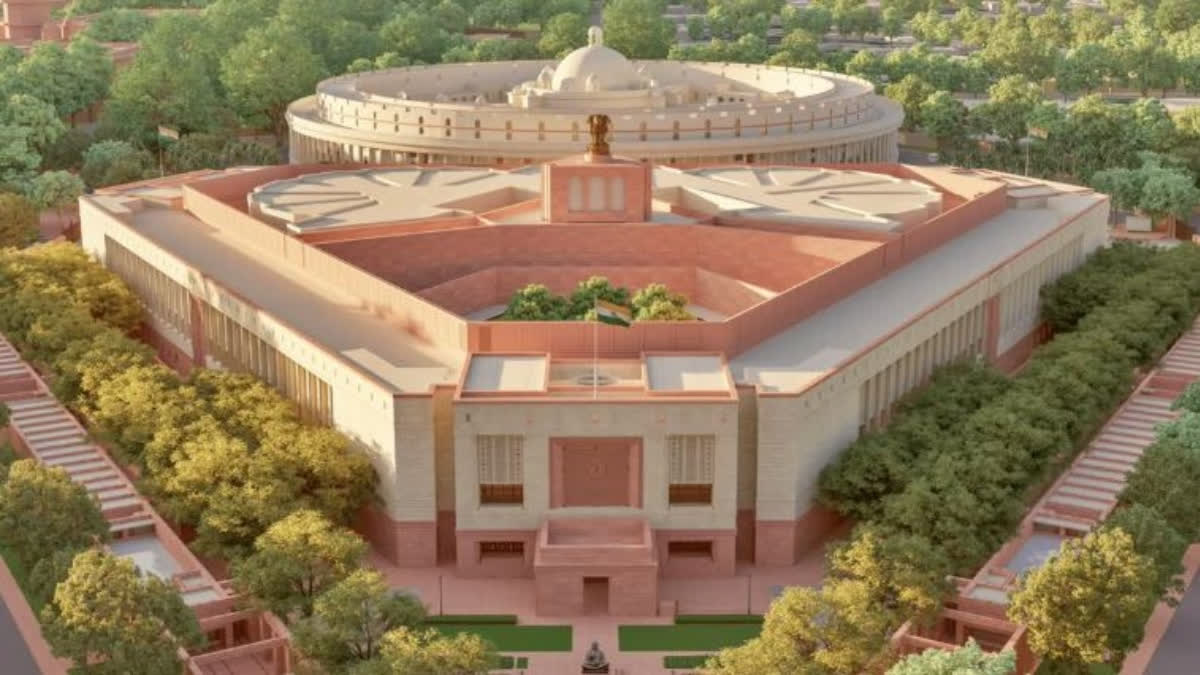
The Nationalist Congress Party (Sharadchandra Pawar) has expressed in-principle agreement with the central government’s proposal to increase the number of Lok Sabha seats by 50 percent across all states alongside the implementation of women’s reservation. Party Lok Sabha MP Supriya Sule stated in Mumbai that her party has no objection to the plan if seats are raised uniformly in equal proportion across every state. However, she clarified that a final decision on supporting the legislation will only be taken after receiving the official copy of the bill and consulting with allies in the INDIA opposition bloc.
According to Sule, the Bharatiya Janata Party (BJP) had invited opposition leaders to a meeting to discuss proposals related to delimitation and women’s reservation. During the consultations, the ruling party suggested expanding Lok Sabha constituencies by 50 percent over their current strength in every state. A key feature of the proposal is that the seat increase will not be determined separately by state population figures, but rather through a uniform 50 percent proportional addition for all states.
Opposition Leaders Seek Time for Internal Consultations
Speaking after attending the meeting, Sule noted that the proposal appeared acceptable to her party in principle because an equal proportional increase would minimize the risk of injustice to any state. As her party’s representative at the talks, she conveyed agreement with the broad concept. Meanwhile, Shiv Sena (Uddhav Balasaheb Thackeray) MP Arvind Sawant and several other opposition leaders sought time to deliberate on the proposal with their respective party leaderships.
Sule emphasized that the NCP-SP has not yet taken a formal decision to back the legislation, pointing out that the party has not received the official draft of the proposed law. She added that the party intends to hold discussions with other constituents of the INDIA alliance to build broader political consensus, stating that the NCP-SP is prepared to support the measure if all opposition partners agree. She also underlined the need to pass both the delimitation and women’s reservation bills through political consensus.
Rising Voter Numbers Strain Constituency Development
Referring to past exercises, Sule noted that delimitation of parliamentary constituencies is not unprecedented, recalling the reorganization carried out during the previous Congress-led United Progressive Alliance government based on geographical and administrative factors. Arguing in favor of expanding Lok Sabha seats by 50 percent, she said smaller constituencies would make it easier for lawmakers to reach voters and address local grievances effectively.
Citing her own Baramati Lok Sabha constituency as an example, Sule pointed out that the electorate has grown from roughly 10 to 12 lakh voters earlier to nearly 20 to 22 lakh voters today. She observed that covering every village and locality in such a vast constituency is practically difficult. Sule also referred to the Rs 5 crore annual local area development fund allotted to MPs, noting that ensuring equitable development across such a large population with limited funds remains a significant challenge.
Centre Weighs Special Session to Pass Bills
Separately, a senior BJP leader indicated during a Diwali Milan event that the government is close to securing the requisite political backing to pass the delimitation and women’s reservation bills. The leader stated that once sufficient support is ensured, the Centre could consider convening a special session of Parliament or advancing the scheduled winter session to take up the legislation.
Despite these political signals, official details regarding the final text of the bill, the exact timeline for its introduction in Parliament, and the specific contours of the proposed changes are yet to be released by the government. As discussions progress, building consensus across party lines will remain central to the delimitation exercise, with the NCP-SP awaiting the formal draft and alliance talks before finalizing its stance.

