Noida is witnessing yet another wave of labour unrest.
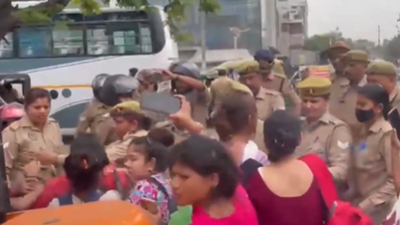
Just days after violent protests shook the city’s industrial belt, a fresh demonstration erupted on April 17 near Sector 8 Jama Masjid, where workers gathered outside a private company demanding higher wages. What was expected to be a routine workday quickly turned into a tense standoff, forcing authorities to step in.
Police reached the spot soon after the protest began and initiated talks with workers in an attempt to prevent escalation.
Ground Reality: Anger Still Simmering Despite Wage Hike Announcement
The latest protest makes one thing clear — the anger among workers has not subsided.
Despite the Uttar Pradesh government recently announcing a hike in minimum wages, many workers believe the increase is insufficient. Their core demands remain unchanged: better salaries, fair overtime compensation, and improved working conditions.
Across Noida’s industrial zones, frustration has been building for days. Workers claim that while production targets continue to rise, wages have not kept pace with inflation and rising living costs.
From Peaceful Protest to Potential Flashpoint
What makes this protest significant is its timing.
Earlier this week, similar demonstrations in Noida turned violent — vehicles were torched, stones were thrown, and police had to use force, including tear gas, to control the situation. Over 300 people were arrested, and multiple FIRs were registered.
Authorities are now on high alert, determined to prevent a repeat of that chaos.
The presence of police at the protest site and ongoing negotiations indicate that the administration is taking no chances this time.
Political Attention and Growing Pressure
The situation has also started drawing political attention.
Delegations from parties like the Samajwadi Party and CPI(M) have moved to engage with protesting workers, signaling that the issue is no longer just industrial — it is becoming political.
With thousands of workers employed in Noida’s factories, any prolonged unrest could have wider implications for the region’s economy.
Bigger Picture: A Wage Crisis Across NCR’s Industrial Belt
This is not an isolated incident — it is part of a larger pattern.
Labour unrest has been spreading across the NCR region, triggered in part by wage hikes in neighbouring Haryana, which raised expectations among workers in Uttar Pradesh. However, the revised wages in UP have failed to match those expectations, widening dissatisfaction.
Noida, being one of India’s largest industrial hubs, has become the epicentre of this growing wage conflict.
A City on Edge: What Happens Next?
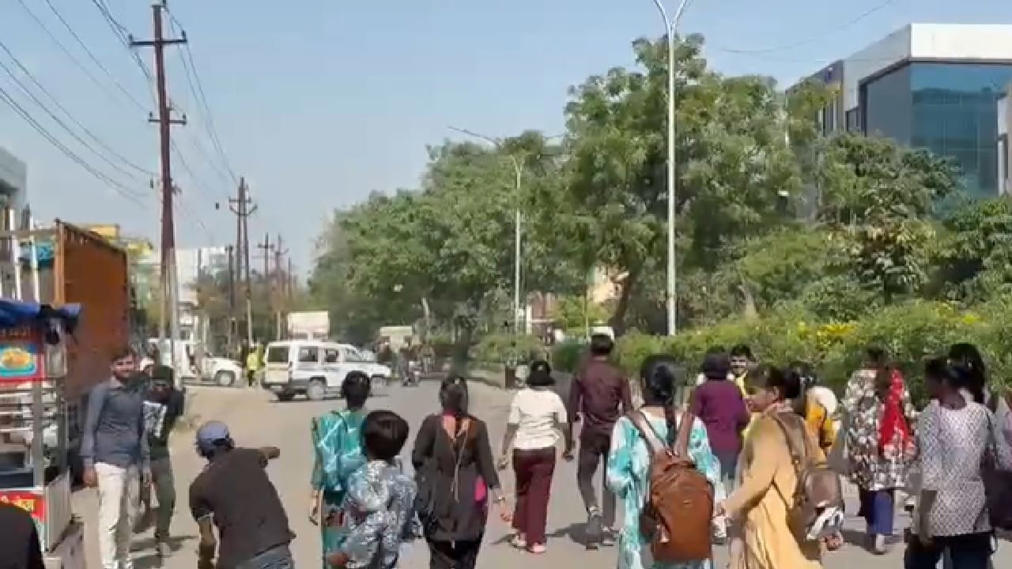
For now, the situation near Sector 8 remains under control, but the underlying issue is far from resolved.
The repeated protests suggest a deeper structural problem — a widening gap between worker expectations and industrial wage policies.
As negotiations continue and pressure mounts from both workers and political groups, Noida stands at a critical juncture.
The coming days will decide whether the city returns to normalcy — or slips back into unrest.