

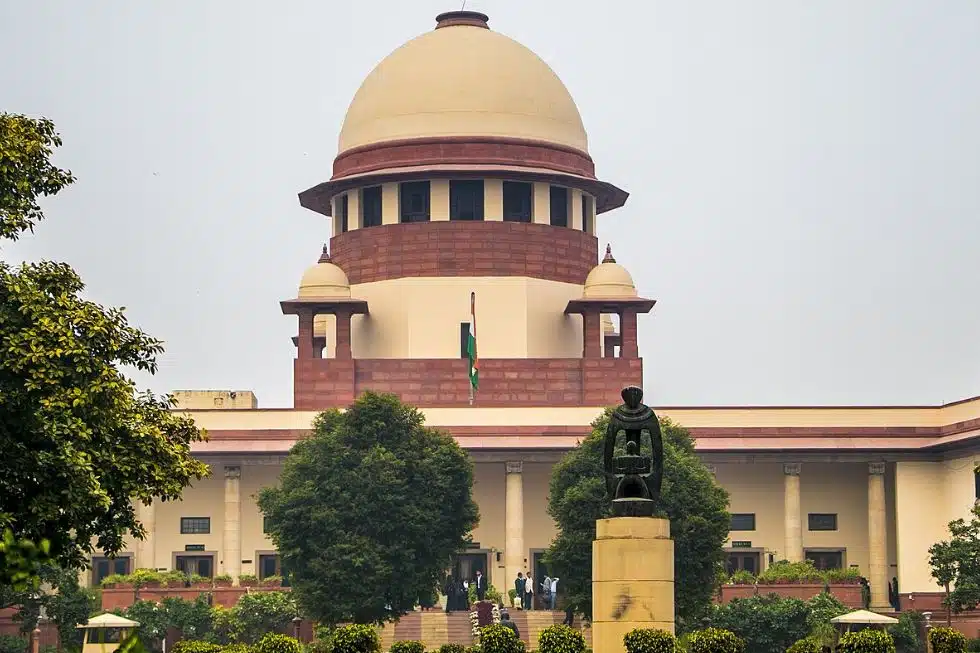
New Delhi: The Supreme Court on Monday permitted the use of green firecrackers across the National Capital Region for two days ahead of Diwali, while ordering that an absolute prohibition on all firecrackers will take effect from November 9. Under the directions issued by the top court, residents may burst certified green firecrackers on November 7 and November 8 exclusively within two designated daily windows, specifically from 6 am to 7 am and from 8 pm to 10 pm. The bench emphasised that this regulatory relief is strictly limited to these scheduled dates and prescribed hours, establishing clear boundaries before a total blanket ban settles over the entire metropolitan region.
Strict Timing Windows Established for Two Days
The apex court outlined precise hourly limits to govern the temporary concession, ensuring that celebrations remain confined to narrow intervals. By restricting activity to one morning hour and two evening hours on November 7 and November 8, the judicial directive aims to moderate the sudden accumulation of smoke and noise across urban neighbourhoods. The bench reiterated that no exemptions or temporal extensions will apply outside the morning slot between 6 am and 7 am and the night slot between 8 pm and 10 pm.
Authorities across Delhi and surrounding districts have been tasked with monitoring compliance during these designated hours. The structured schedule seeks to reconcile traditional seasonal festivities with urgent environmental considerations, ensuring that emissions are kept within manageable thresholds while granting residents a tightly supervised period of celebration before total restrictions are enforced.
Complete Ban on Firecrackers Enforced From November 9
The limited relaxation will terminate immediately after the two-day period concludes, with a comprehensive prohibition on the manufacture, sale, and bursting of firecrackers taking effect across Delhi-NCR from November 9. The court clarified that the regulatory framework leaves no scope for continued use after this cut-off date, effectively shutting down all pyrotechnic activities in the National Capital Region for the remainder of the season.
This comprehensive prohibition is intended to curb the severe environmental deterioration and heavy atmospheric particulate matter that routinely afflict the national capital during this period. By establishing a definitive terminus for all firecracker usage, the court has prioritised public health and regional air quality, warning that any bursting of crackers after November 8 will constitute a direct violation of judicial orders.
Protective 300-Metre Buffer Zones Around Vulnerable Centres
Alongside temporal restrictions, the Supreme Court mandated spatial safeguards to shield sensitive populations from acoustic disturbance and toxic emissions. The court ordered that no firecrackers shall be burst within a 300-metre radius of hospitals, nursing homes, primary health centres, district health centres, old-age homes, and all officially notified silence zones across the National Capital Region.
The spatial prohibition is specifically designed to safeguard patients, elderly citizens, and vulnerable individuals who are most susceptible to elevated pollution and sudden, loud percussive sounds. By establishing these wide protective buffer perimeters, the judiciary seeks to insulate critical healthcare infrastructure and residential care facilities from hazardous exposure. Through this dual system of spatial restrictions and strict time allocations, the Supreme Court has laid down an uncompromising regulatory regime aimed at controlling pollution levels while enforcing an imminent region-wide ban.

