

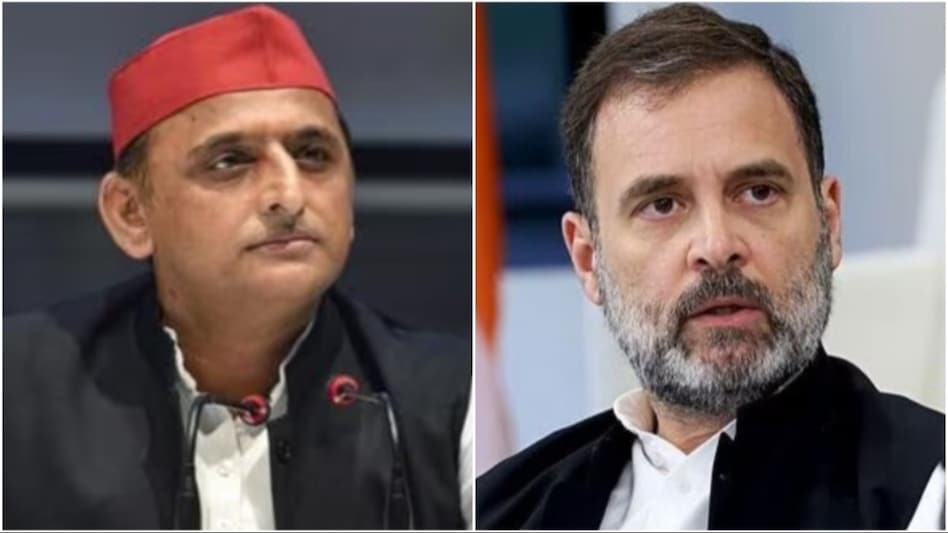
Tensions over seat-sharing between the Samajwadi Party and the Congress have intensified in Uttar Pradesh ahead of the upcoming assembly elections, with the two INDIA bloc allies presenting sharply contrasting expectations. While the Congress has submitted a list of 181 assembly constituencies where it claims to hold a strong position, Samajwadi Party president Akhilesh Yadav is reportedly inclined to offer the party only 30 to 40 seats. The divergence between the demand and the likely offer has emerged as a major challenge for the opposition alliance before formal negotiations begin.
The Congress leadership prepared the list of 181 constituencies based on internal assessments and ground reports. Party leaders argue that the political atmosphere in the state has shifted in their favour over the past few months, with growing support among minority, Dalit, and young voters. The party believes that contesting these seats under the alliance could yield surprising results and help it regain lost political ground in Uttar Pradesh. However, the Samajwadi Party leadership appears reluctant to accept such a large claim, maintaining that seat distribution must reflect realistic ground strength rather than numbers alone.
Winnability Over Numbers
Akhilesh Yadav has made it clear that winnability, not numerical demands, will be the primary criterion for allocating seats in the alliance. The Samajwadi Party is weighing the Congress claim against the party’s performance in the previous assembly elections, in which it secured just 2.33 percent of the vote and won only two seats. Although Yadav has stated that coalition obligations will be respected, he has also emphasized that actual ground realities cannot be overlooked. A senior Samajwadi Party office-bearer, speaking on condition of anonymity, said that while allies deserve a respectable share, decisions cannot rest merely on claims made on paper. Internal party discussions indicate that the Samajwadi Party may ultimately agree to allocate between 30 and 40 seats to the Congress.
Lessons From Bihar Elections
The Samajwadi Party leadership is also keen to avoid a repeat of the friction witnessed between the Congress and the Rashtriya Janata Dal during the assembly elections in Bihar. According to a party leader, prolonged disagreements over seat-sharing in Bihar continued until the final stages, resulting in both allies fielding candidates against each other in several constituencies and suffering heavy electoral losses. Yadav is determined to prevent any friendly contests in Uttar Pradesh and is prepared to take tough decisions to ensure a clear pre-poll understanding. While the Congress seeks greater space to rebuild its presence, the Samajwadi Party is working on a strategy to contest the majority of seats itself and retain firm control over the campaign.
Focus on Reserved Seats and Formal Talks
Alongside its broader seat demand, the Congress is placing special emphasis on constituencies reserved for Scheduled Castes. At a state executive meeting of the party’s Scheduled Caste department held at the state headquarters on Saturday under the chairmanship of MP Tanuj Punia, state in-charge Rajendra Pal Gautam and state president Aradhana Mishra Mona stressed the need to focus on reserved seats. Formal seat-sharing talks between the two parties are scheduled to begin after November 17. Gautam said both parties are forming committees to evaluate each constituency, examine every aspect of the seats they wish to contest, and submit their reports to the top leadership for a final decision. He added that while the Congress seeks a respectable share, the primary goal of both allies is to field winnable candidates to unseat the BJP.

