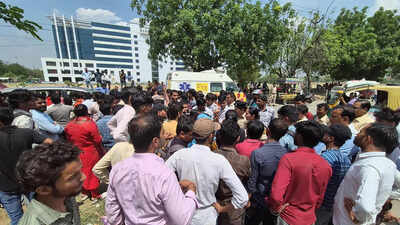
A routine wage protest in Gurugram’s industrial hub has now spiralled into a serious law-and-order investigation, after police uncovered explosive WhatsApp messages allegedly plotting violence, arson, and even targeted killing during the unrest.
What began as a demand for salary hikes in IMT Manesar has now exposed what authorities describe as a “pre-planned attempt to trigger large-scale riots”—with digital evidence pointing toward organised instigation.
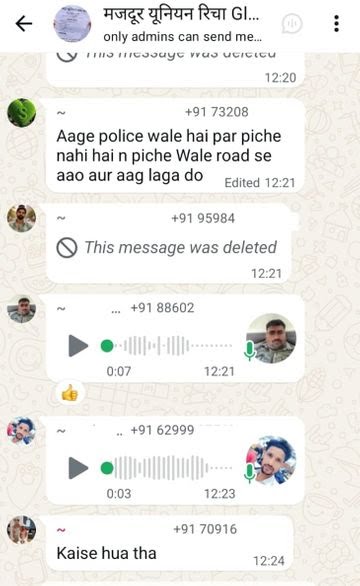
Explosive WhatsApp Messages Reveal Violent Intent
Investigators have recovered multiple messages circulated across workers’ WhatsApp groups—messages that go far beyond protest and suggest deliberate attempts to incite chaos.
Some of the messages allegedly called for:
●Targeting a factory manager named Rambeer
●Evading police and attacking from behind
●Using beer bottles filled with petrol to carry out arson
The language used in these chats indicates not just anger, but clear intent to escalate a protest into violence, raising serious concerns about how digital platforms are being used to mobilise crowds in sensitive situations.
Police officials say these messages played a key role in triggering the escalation on April 9, when the situation turned volatile.
From Protest to Violence: What Happened on Ground
The unrest traces back to April 6, when workers at a major company launched a protest demanding wage increases. While their demands were reportedly addressed, the agitation quickly spread to employees of other companies across IMT Manesar.
By April 9, tensions had peaked.
Authorities imposed prohibitory orders, but crowds gathered in large numbers. What followed was a rapid breakdown of order:
●Stone pelting erupted at industrial units
●Police had to resort to lathi charge to disperse crowds
●Vehicles were vandalised
●A police motorcycle was set on fire
●Several locations witnessed arson and destruction
What stood out, however, was the sudden and coordinated nature of the violence, which investigators now believe may have been fuelled by the messages circulating online.
Police Claim ‘External Elements’ Behind the Conspiracy
According to police officials, the investigation suggests that many of the individuals behind these provocative messages were not regular workers, but “external elements” attempting to incite unrest.
Authorities believe these actors deliberately used WhatsApp groups to:
●Mislead workers
●Amplify tensions
Coordinate attacks at specific times, including late-night plans when police presence would be lower
The possibility of a larger organised network attempting to destabilise the industrial belt is now under serious investigation.
61 Arrested, Several Still Under Probe
So far, police have arrested 61 individuals, including 15 women, in connection with the violence. While some have been granted bail, many remain in custody at Bhondsi jail.
Multiple FIRs have been registered, and digital evidence—including chat records, phone data, and group activity—is being analysed to trace the origin and spread of the messages.
Officials have indicated that more arrests are likely as the investigation progresses.
Industry Shocked, Authorities Move to Restore Stability
The incident has sent shockwaves across Gurugram’s industrial ecosystem, which employs thousands of workers and serves as a major manufacturing hub.
In response, senior officials—including police and labour department representatives—held meetings with company managements and contractors, issuing strict directives:
●Ensure timely and transparent wage payments
●Maintain proper communication with workers
●Avoid any form of mistreatment
●Display wage details publicly
Workers, meanwhile, have been urged to stay away from rumours and verify information before reacting, especially on social media platforms.
A Warning Signal for the Digital Age
This episode highlights a growing challenge—how quickly misinformation and provocation can spread through digital channels and translate into real-world violence.
What started as a labour issue has now exposed a deeper concern: the role of organised messaging in shaping crowd behaviour and triggering unrest.
Authorities are now not just dealing with a protest gone wrong—but with a case that could redefine how law enforcement approaches digital evidence, organised instigation, and industrial security.