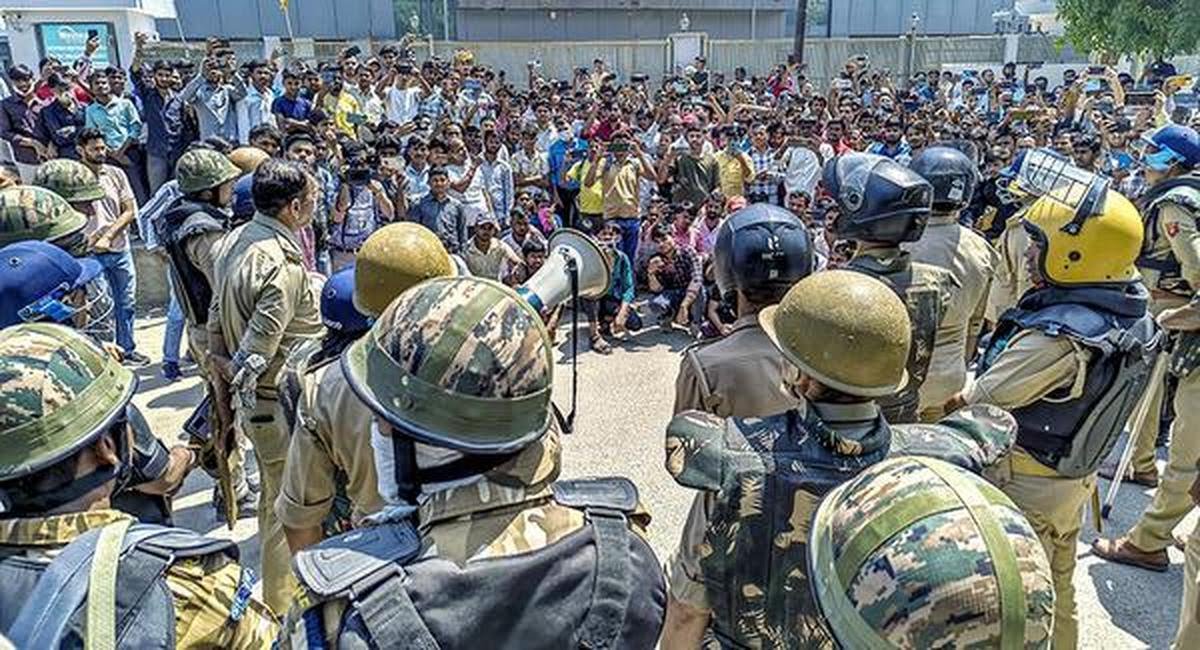
In a major move aimed at calming rising labour unrest, the Uttar Pradesh government has increased minimum wages across categories following intense protests in Noida and Ghaziabad. The decision comes after days of demonstrations by factory workers demanding better pay and working conditions.
Officials confirmed that the revised wages will be implemented retrospectively from April 1, 2026, offering immediate financial relief to lakhs of workers in the region.
From Protest to Policy: How Workers Forced a Big Decision
The wage hike did not come in isolation. It follows large-scale protests that turned violent in Noida’s industrial belt, where thousands of workers took to the streets demanding parity with neighbouring Haryana, where wages were recently increased significantly.
The situation escalated with incidents of stone-pelting, arson, and clashes with police, putting immense pressure on the government to act quickly.
Within days, the administration responded by approving a revised wage structure, signaling a direct policy response to ground-level unrest.
New Minimum Wages: What Workers Will Now Earn
Under the revised structure for Gautam Buddh Nagar (Noida) and Ghaziabad:
Unskilled workers: Rs 11,313 → Rs 13,690 per month
Semi-skilled workers: Rs 15,059 per month
Skilled workers: Rs 16,868 per month
This marks an increase of around 20–21%, depending on the category.
The revised rates apply specifically to industrial hubs like Noida and Ghaziabad, where the protests were most intense.

Wider Impact Across Uttar Pradesh
The government has also revised wages for other regions:
Other municipal areas:
Unskilled: Rs 13,006
Semi-skilled: Rs 14,306
Skilled: Rs 16,025
Remaining districts:
Unskilled: Rs 12,356
Semi-skilled: Rs 13,591
Skilled: Rs 15,224
Officials stated that the revised structure was finalized after consultations with labour groups and industry stakeholders to maintain a balance between workers’ welfare and industrial sustainability.
Why This Hike Matters Now
The wage revision comes at a critical time when:
●Inflation and cost of living are rising
●Workers are demanding fair pay for equal work across states
●Industrial belts like Noida employ over 10 lakh workers
The wage gap with Haryana—where salaries were recently increased by around 35%—had triggered dissatisfaction among workers in Uttar Pradesh.
This new hike is expected to reduce that gap and bring temporary relief, though demands for further increases may continue.
Government’s Strategy: Calm the Ground, Stabilize Industry
Authorities have positioned the move as part of a broader effort to:
Restore normalcy in industrial areas
Prevent further protests and disruptions
Ensure better compliance with labour standards
The administration has also indicated that labour reforms and further wage revisions may be considered in the future.