

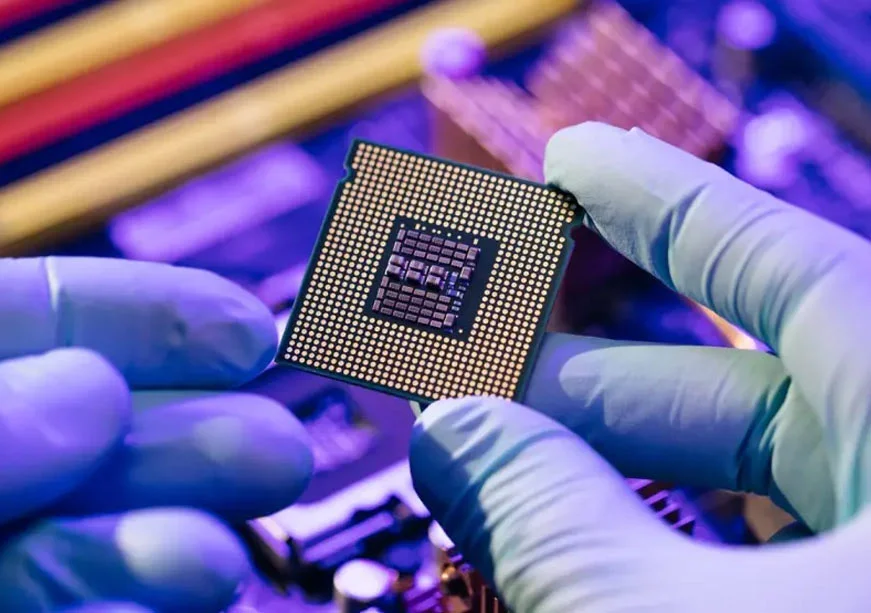
Semiconductor chips have become the foundation of the modern global economy. From smartphones, electric vehicles and medical equipment to artificial intelligence systems, satellites and fighter aircraft, almost every advanced technology depends on these tiny electronic components. As demand for computing power continues to rise, semiconductor manufacturing has also become a major economic and geopolitical priority.
Although dozens of economies participate in the global semiconductor supply chain, production capacity and specialised expertise remain concentrated in a handful of major players. Taiwan occupies a particularly important position because of its leadership in advanced contract chip manufacturing. Its dominance, especially through Taiwan Semiconductor Manufacturing Company (TSMC), has made the island central to the technology strategies of major economies.
How Many Countries Are Involved in Semiconductor Manufacturing?
Semiconductor production is not a single activity. It involves several interconnected stages, including chip design, wafer fabrication, assembly, testing and packaging. Different countries specialise in different parts of this process, making the industry one of the most globally interconnected manufacturing sectors.
According to an OECD analysis of global wafer-fabrication capacity, China, Taiwan, South Korea, Japan and the United States together account for nearly 90 per cent of worldwide capacity. This figure refers specifically to wafer fabrication, rather than the entire semiconductor market or every stage of the supply chain.
The United States is particularly strong in chip design, intellectual property and semiconductor software. China has expanded its manufacturing capabilities and plays a significant role in assembly and testing. South Korea is a major force in memory chips, while Japan supplies important materials and manufacturing equipment.
Europe also has a critical role. The Netherlands is home to ASML, the company that produces the extreme ultraviolet lithography systems required for manufacturing the most advanced chips. Germany and other European economies contribute to automotive semiconductors, industrial electronics, research and specialised manufacturing.
Meanwhile, Singapore, Malaysia, Vietnam and the Philippines are important participants in semiconductor manufacturing, assembly, testing and packaging. India is also seeking to expand its role through investments in semiconductor fabrication and chip assembly facilities.
What Gives Taiwan an Edge in Advanced Semiconductor Production?
Taiwan’s position is closely linked to its specialised foundry industry. A foundry manufactures chips based on designs provided by other companies. This allows technology businesses to concentrate on research and product development without having to build and operate expensive semiconductor factories themselves.
TSMC is the world’s leading dedicated semiconductor foundry. Founded in 1987, it pioneered the pure-play foundry model and built its business around manufacturing chips for customers rather than competing with them through its own branded semiconductor products.
The company’s importance has grown with the increasing demand for high-performance computing, artificial intelligence processors and advanced smartphone chips. Major technology companies depend on specialised foundries to manufacture processors that require extremely precise production techniques.
TSMC’s 2025 annual reporting highlights the scale of its technological capabilities. Its 3-nanometre technology accounted for 24 per cent of its wafer revenue in 2025, compared with 18 per cent in 2024. This demonstrates the growing importance of advanced manufacturing processes in its business.
Taiwan’s advantage is not limited to one company. Its semiconductor ecosystem includes suppliers, research institutions, equipment specialists, engineering talent and manufacturing facilities that work closely together.
How Government Investment and the Foundry Model Built Taiwan’s Lead
Taiwan’s semiconductor success developed over several decades. During the 1970s and 1980s, the government invested in technology research, international cooperation and the development of skilled engineers. The Industrial Technology Research Institute (ITRI) played an important role in building the country’s early semiconductor capabilities.
The establishment of Hsinchu Science Park in 1980 helped create an industrial ecosystem where companies, research laboratories and suppliers could operate in close proximity.
A major turning point came in 1987, when Morris Chang established TSMC. Its dedicated foundry model gave semiconductor design companies access to advanced manufacturing without requiring them to invest billions of dollars in their own factories. This helped the global chip industry expand and strengthened Taiwan’s position as a manufacturing hub.
The concentration of specialised suppliers and skilled professionals also created efficiencies in production, research and problem-solving. Over time, these advantages became difficult for competing economies to replicate.
How Taiwan’s Chip Industry Shapes Global Technology and Geopolitics
Taiwan’s role in advanced chip manufacturing has implications far beyond the technology sector. Semiconductors are essential to artificial intelligence, telecommunications, defence systems, automobiles and critical infrastructure. Any major disruption to production or shipping around Taiwan could therefore affect industries across the world.
The island’s semiconductor importance has also become a geopolitical concern amid tensions between China and Taiwan. Governments, particularly the United States and its allies, are increasingly seeking to diversify production and reduce dependence on a limited number of manufacturing locations.
However, building semiconductor factories elsewhere is an expensive and technically challenging process. It requires specialised machinery, reliable power and water supplies, highly trained workers, advanced materials and years of investment.
Taiwan’s leadership is therefore the result of decades of planning, industrial expertise and technological development. While other countries are investing heavily to strengthen their semiconductor capabilities, Taiwan remains a crucial centre of advanced chip manufacturing and a key link in the global technology supply chain.

