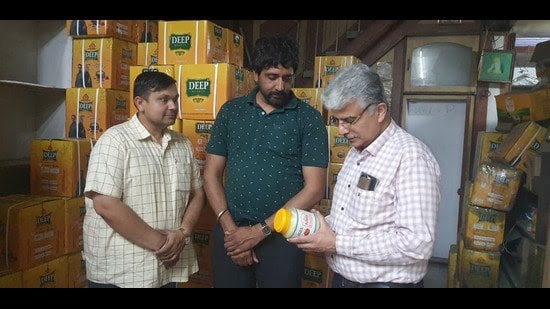
A major food safety crackdown in Ludhiana has brought the issue of adulteration back into sharp focus after authorities seized nearly 1,500 kg of spurious desi ghee during a raid.According to reports, the operation was carried out by the health department, which recovered large quantities of suspected fake ghee along with packaging material and equipment used to process and distribute the product. Officials believe the seized stock was intended for large-scale market supply, raising concerns about how widely such products may have already circulated.
More Than a Raid: Public Debate Gains Momentum
While the seizure itself is significant, the incident has quickly evolved into a larger national conversation on food safety enforcement.Across social platforms, many users have raised concerns about the scope and depth of ongoing crackdowns, questioning whether such actions are targeting only smaller operators while leaving bigger networks relatively untouched.The growing sentiment suggests that enforcement must expand beyond isolated raids and address the entire supply chain, including organized and large-scale players.
Ground Reports Hint at Deeper Networks
Adding to the concern are ground-level observations from different regions, indicating that adulteration activities often continue even after raids.References to similar issues in places like Agra suggest that despite enforcement actions, illegal production may resume or shift locations — pointing toward a more complex and deeply rooted system.While such claims remain unverified, they reflect a widespread perception that the root of the problem may still not be fully addressed.

Adulteration Not Limited to Ghee Alone
Experts warn that this issue extends far beyond one product. Everyday food items such as milk, edible oils, spices, and packaged goods have repeatedly come under scrutiny.The concern for consumers is growing —
what is sold as “pure” may not always meet safety standards.Health professionals caution that adulterated food can lead to long-term health risks, making consistent, transparent, and large-scale enforcement essential.
The Bigger Question: How Deep Will Enforcement Go?
While recent raids show increased activity by authorities, public attention is now focused on a critical question:
Will the crackdown remain limited to smaller operators, or will it extend to the entire ecosystem — including major players and distribution networks?Because unless action is uniform and far-reaching, the cycle of adulteration may continue.
Demand for Equal Accountability Intensifies
The Ludhiana seizure is no longer just a single enforcement case — it has become a symbol of growing public demand for accountability in the food industry.
For consumers across India, the expectation is simple and clear:
safe, authentic food — regardless of who produces it.