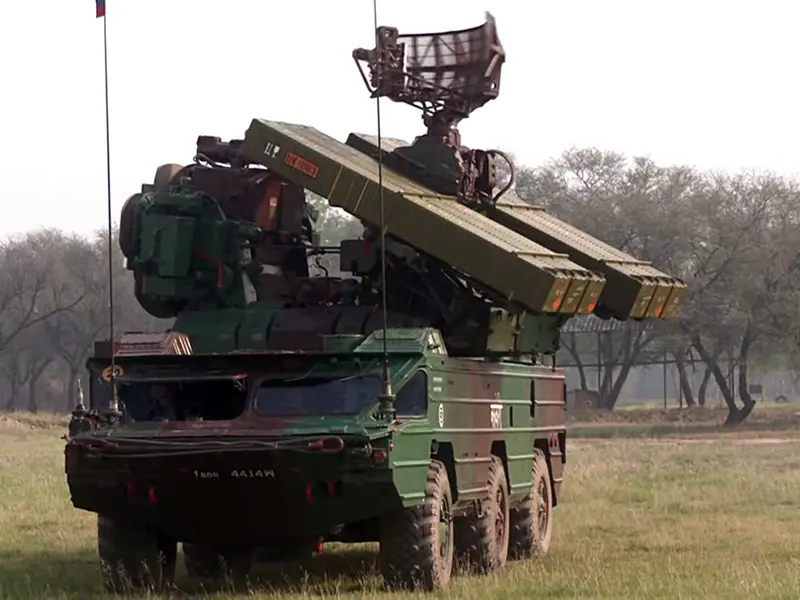
In a groundbreaking move to strengthen the nation’s air defence capabilities, India is preparing to deploy its first fully indigenous Integrated Air Defence Weapon System (IADWS) to safeguard the skies over Delhi-NCR. The multi-layered shield, designed to intercept everything from fighter jets to drones and ballistic missiles, marks one of the most ambitious defence upgrades for the national capital.
Developed jointly by the Indian Air Force (IAF) and the Defence Research and Development Organisation (DRDO), the initiative underscores India’s accelerating journey toward Atmanirbhar Bharat in defence technology.
A Pivot Toward Homegrown Power
The IADWS will integrate cutting-edge Indian technology, including:
●QRSAM (Quick Reaction Surface-to-Air Missile)
●VSHORAD (Very Short Range Air Defence System) designed to neutralise low-flying drones and helicopters
●Medium-Range SAM units and advanced radar systems in a unified command network
This represents a major shift away from dependence on expensive foreign systems such as the US-made NASAMS-II, which was deemed “financially unviable” given the high acquisition and lifecycle cost.
Instead, India’s focus is on building a scalable, affordable, and future-ready defence grid crafted by its own scientists and engineers.
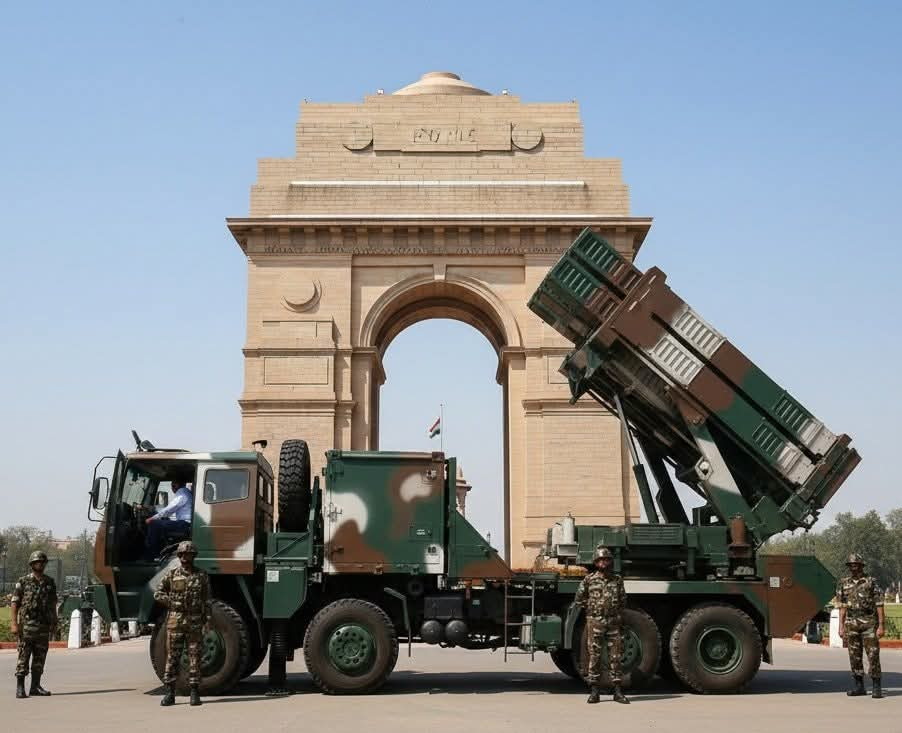
Shielding the Nation’s Nerve Centre
Delhi-NCR is one of the world’s most sensitive security zones — home to Parliament, Rashtrapati Bhavan, diplomatic missions, strategic installations, and critical infrastructure.
The new IADWS will protect the capital from:
●High-speed fighter jets
●Cruise and tactical missiles
●Swarm drones and unmanned aerial vehicles
●Loitering munitions
Officials confirm that the project is progressing swiftly through the Ministry of Defence, especially after the lessons learned during Operation Sindoor, conducted earlier this year.
DRDO’s Expanding Air Defence Arsenal
DRDO’s proven record in building air defence systems gives strong credibility to this ambitious project. Quite notably:
●QRSAM has already shown exceptional results in trials, engaging multiple aerial targets with precision.
●Medium-Range SAM, developed with Israel, is already deployed by the Indian Navy and Air Force.
●Project Kusha, another DRDO flagship, aims to deliver long-range interception — a capability comparable to global systems like Israel’s David’s Sling and Russia’s S-400.
In parallel, India continues to receive additional units of the S-400 Triumf system from Russia, while discussions on the futuristic S-500 indicate a desire for stronger long-range deterrence.
A New Era of Defence Preparedness
The deployment of the indigenous IADWS could redefine India’s air defence architecture, making Delhi one of the best-protected capitals globally. It not only reduces reliance on foreign suppliers but also sets the stage for next-generation integrated warfare systems that blend AI, real-time tracking, and automated threat neutralisation.
This is more than an operational upgrade — it is a powerful message of India’s technological confidence and strategic autonomy.