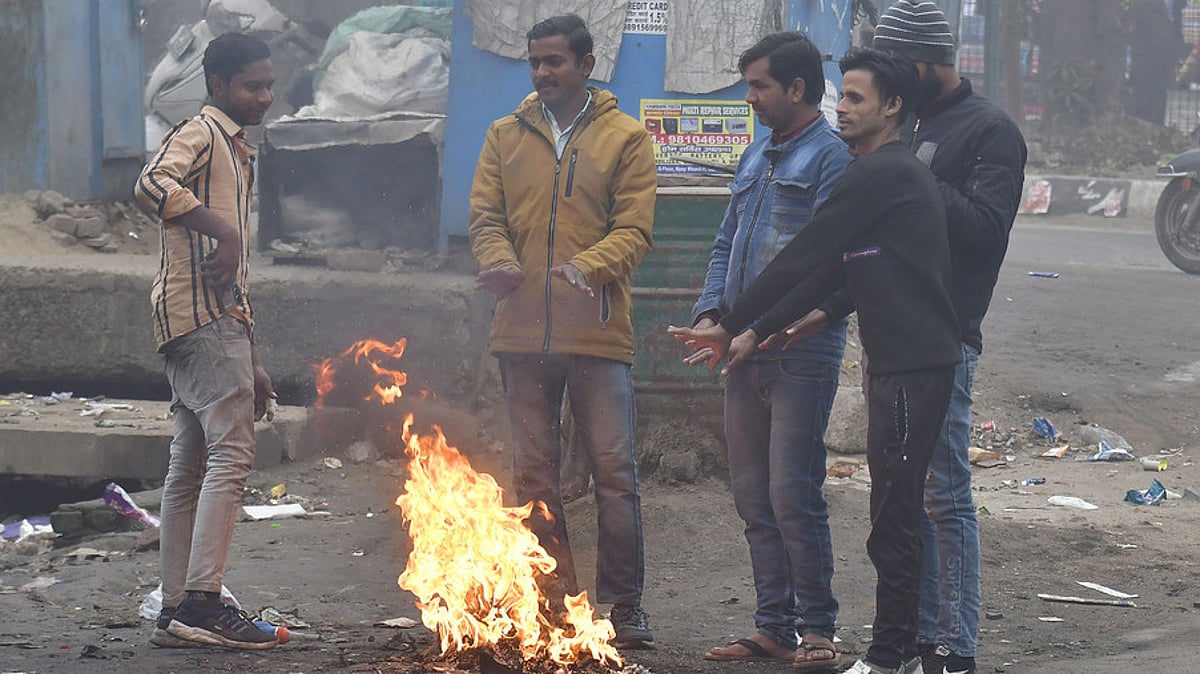
The national capital is facing one of its harshest winter spells this season, with temperatures plunging close to 2 degrees Celsius and cold wave conditions intensifying across Delhi-NCR. The India Meteorological Department (IMD) has issued an orange alert for the next three days, warning residents of severe cold, dense fog, and extremely chilly nights.
According to IMD data, Delhi recorded its coldest night of the season on Sunday, with the minimum temperature dropping to 2.9°C in Ayanagar, making it the coldest day since January 15, 2024. While sunshine kept daytime conditions relatively clear, temperatures dipped sharply after sunset, significantly increasing discomfort levels.
Temperature Likely to Drop Further
Weather officials have forecast that on January 12, the minimum temperature could fall further to around 2°C, while the maximum temperature is expected to hover near 18°C. Cloudy skies and persistent cold winds are likely to maintain severe cold wave conditions throughout the day.
IMD has cautioned that the minimum temperature may fall by another 1–2°C over the next few days, pushing mercury levels well below normal for this time of the year.
IMD Warning and Safety Advisory
An orange alert has been issued for January 12 and 13 across Delhi, Noida, Ghaziabad, Gurugram, and other NCR regions. Dense fog is expected during late night and early morning hours, leading to very low visibility, especially on highways and open stretches.
The weather department has advised people to avoid unnecessary travel at night, particularly the elderly, children, and those with respiratory issues, as cold stress is likely to be more severe after sunset.

AQI and City-Wise Conditions
On Monday, Delhi recorded a maximum temperature of 18.2°C with an Air Quality Index (AQI) of 311, falling in the very poor category.
Noida: 18.6°C, AQI 316
Ghaziabad: 18.5°C, AQI 328
Gurugram: 18.4°C, AQI 295
Greater Noida: 18.5°C, AQI 312
Faridabad: 18.5°C, AQI 276
Relief Expected After January 14
IMD has issued a yellow alert for January 14, as dense fog and cold wave conditions are expected to persist, though with slightly reduced intensity. A gradual rise of 1–2°C in minimum temperatures is likely after January 14, and weather conditions may improve further by January 17.
Until then, residents are advised to stay warm, remain alert during foggy hours, and follow official advisories to minimize health and travel risks.