
For years, television channels like Zee News shaped public discourse with massive reach, continuous coverage, and high-energy debates. But today, a silent shift is underway.
Viewers are no longer just consuming news—they are choosing how they want to understand it.
And in this evolving landscape, independent voices like Prasun Bajpai are steadily gaining ground—not by competing on volume, but by winning on attention.
The Analytics Reality That Changes Everything
At first glance, Zee News appears dominant—with millions of subscribers and a constant stream of content. But when performance is measured through digital metrics, the narrative changes dramatically.
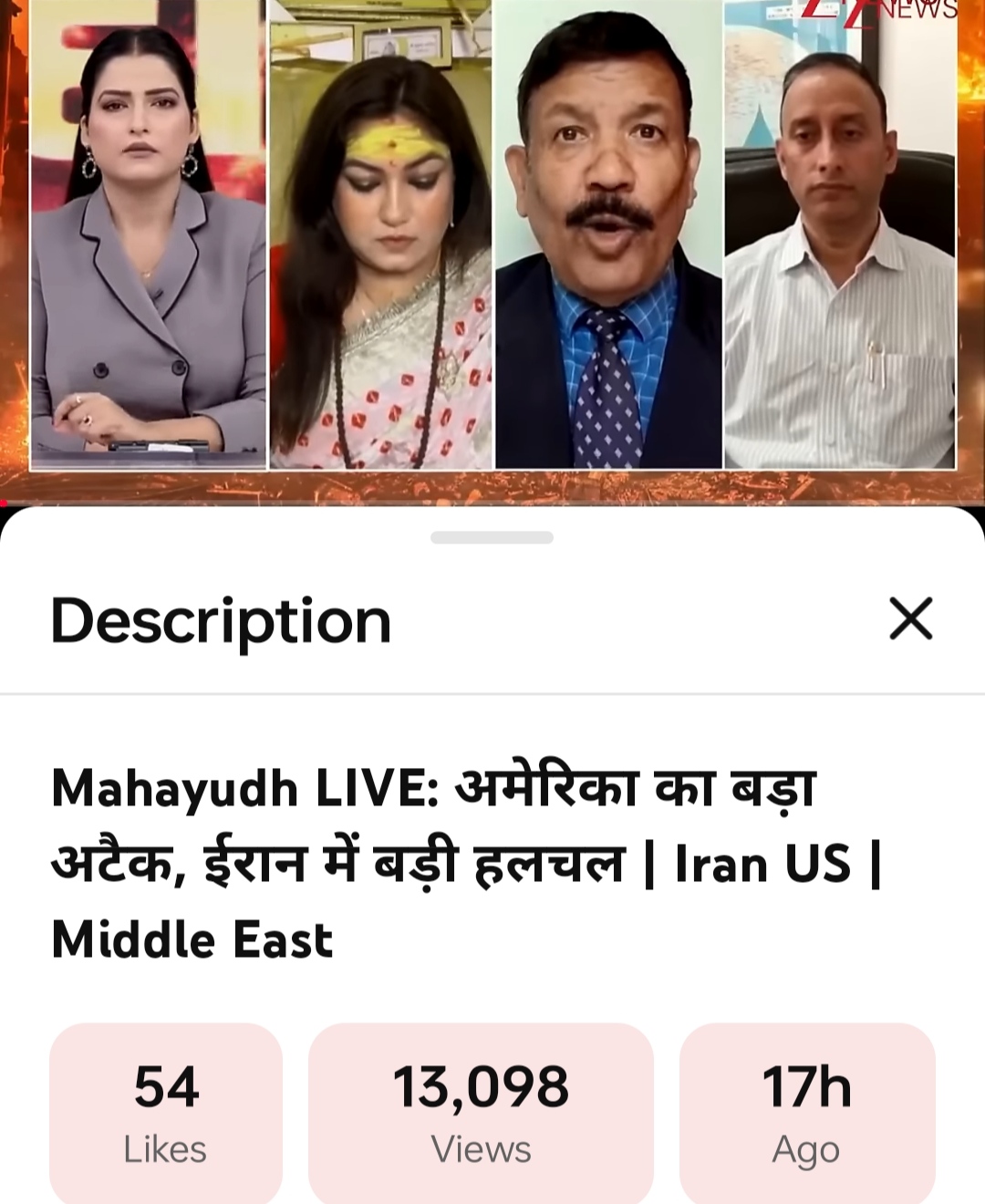
Zee News operates at scale:
25M+ subscribers
40–80 uploads daily
Average views ranging from 50,000 to 5 lakh per video
CTR between 3% and 6%
Average view duration of around 2 to 4 minutes
Retention levels hovering between 20% and 35%
In contrast, Prasun Bajpai follows a focused model:
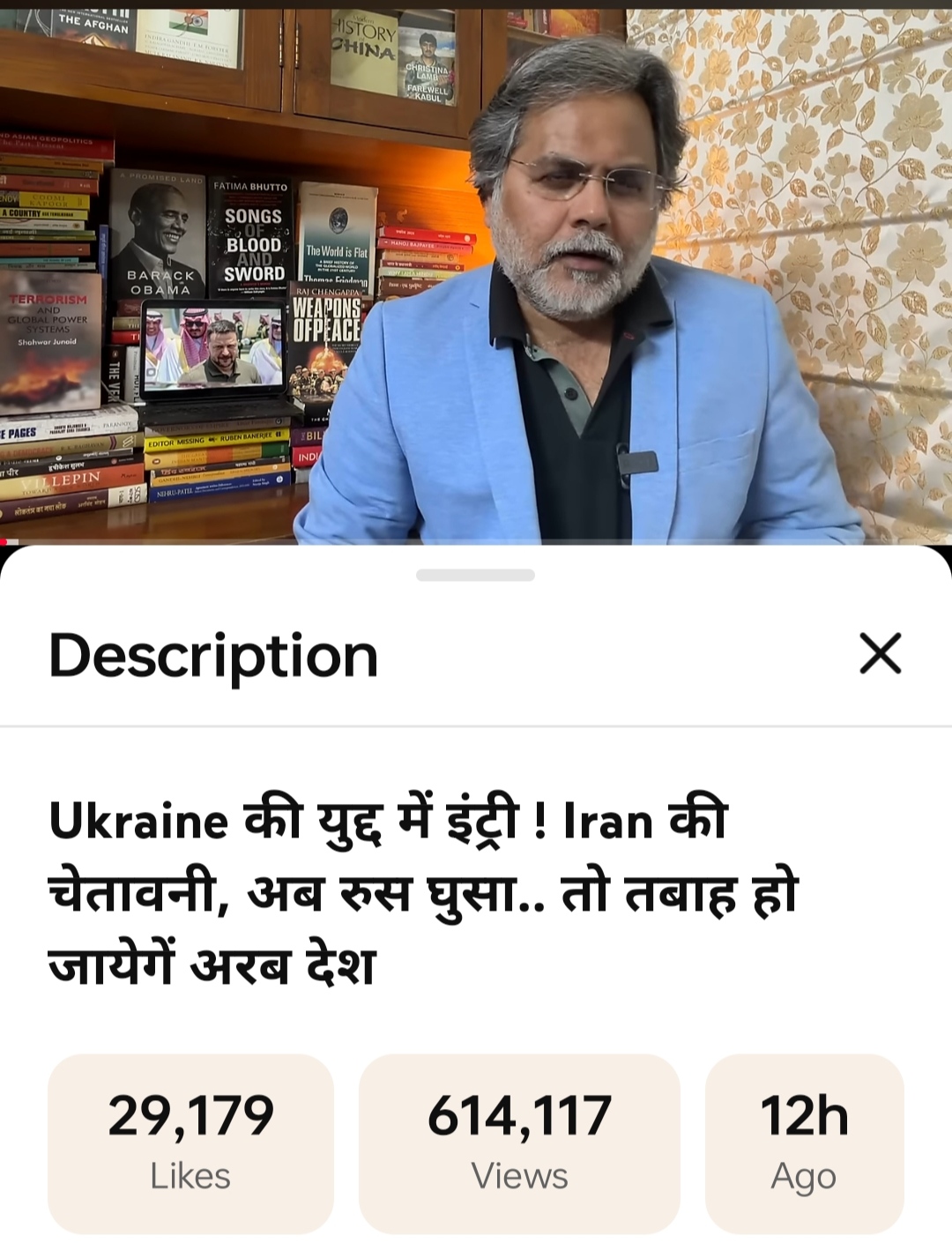
Smaller but rapidly growing audience
3–6 uploads per week
Average views ranging from 2 lakh to 20 lakh+
CTR between 6% and 12%
Average view duration of 8 to 20 minutes
Retention levels between 45% and 70%
The difference becomes clear when you look beyond views and into watch time.
A short news clip with low retention may generate just a minute or two of viewing, while a long-form explanatory video can hold viewers for nearly ten minutes or more.
In simple terms:
One well-performing Bajpai video can generate multiple times the watch time of several Zee News uploads combined.
Content That Competes on Depth, Not Speed
Zee News thrives on immediacy—breaking updates, rapid uploads, and debate-driven programming designed to capture instant attention.
Prasun Bajpai takes a different route. His content is structured, narrative-driven, and built around explaining issues rather than reacting to them.
This distinction reflects a broader audience shift. Viewers are increasingly moving away from fragmented information toward clarity and context.
The Retention Advantage
In digital media, holding attention is more powerful than attracting it.
Zee News content often sees quick drop-offs as viewers skim headlines and move on.
Bajpai’s videos, however, are designed to sustain interest. The longer viewers stay, the more the algorithm promotes the content—creating a compounding growth effect.
This is where the real battle is being won—not at the click, but after it.
From Viewers to Community
Zee News commands a large audience, but interaction remains largely one-directional.
Prasun Bajpai, on the other hand, has cultivated a participatory audience. His videos generate:
●Thousands of comments
●High like-to-view ratios
●Strong discussion threads
This transforms content into conversation, and viewers into a community.
The Power of Organic Reach
Another critical difference lies in how content travels.
Zee News content largely remains within its broadcast and platform ecosystem.
Bajpai’s videos, however, frequently circulate across:
●WhatsApp groups
●X discussions
●Facebook communities
This organic sharing creates exponential reach—without relying solely on platform algorithms.
Trust Is Becoming Personal
One of the most defining changes in digital media is the shift from institutional trust to personal trust.
Zee News represents a brand.
Prasun Bajpai represents a voice.
And increasingly, audiences are choosing voices they feel connected to—voices they return to repeatedly.
Returning viewers are one of the strongest signals of credibility, and this is where independent creators are gaining a clear advantage.
Perception and Its Impact
A section of viewers perceives mainstream television content as:
●Debate-heavy
●Fast-paced but less detailed
●Aligned with certain narratives
In contrast, independent creators are often seen as:
●More explanatory
●More accessible
●More transparent
Whether entirely accurate or not, this perception directly influences viewer behavior—and behavior drives growth.
The Bigger Shift
This is not just a comparison between one journalist and one channel.
It reflects a structural transformation in media:
●From broadcast dominance → engagement economy
●From high volume → high retention
●From passive watching → active selection
●From brand authority → personal credibility
Prasun Bajpai’s rise is not accidental—it is driven by the mechanics of the digital ecosystem.
◆ Today’s audience is no longer impressed by how much content is produced.
◆ They care about how much value they receive from it.
Zee News continues to dominate in scale and visibility.
But Prasun Bajpai is steadily capturing what matters more in the digital age—
attention, trust, and meaningful engagement.
And that is where the future of news is being rewritten.