

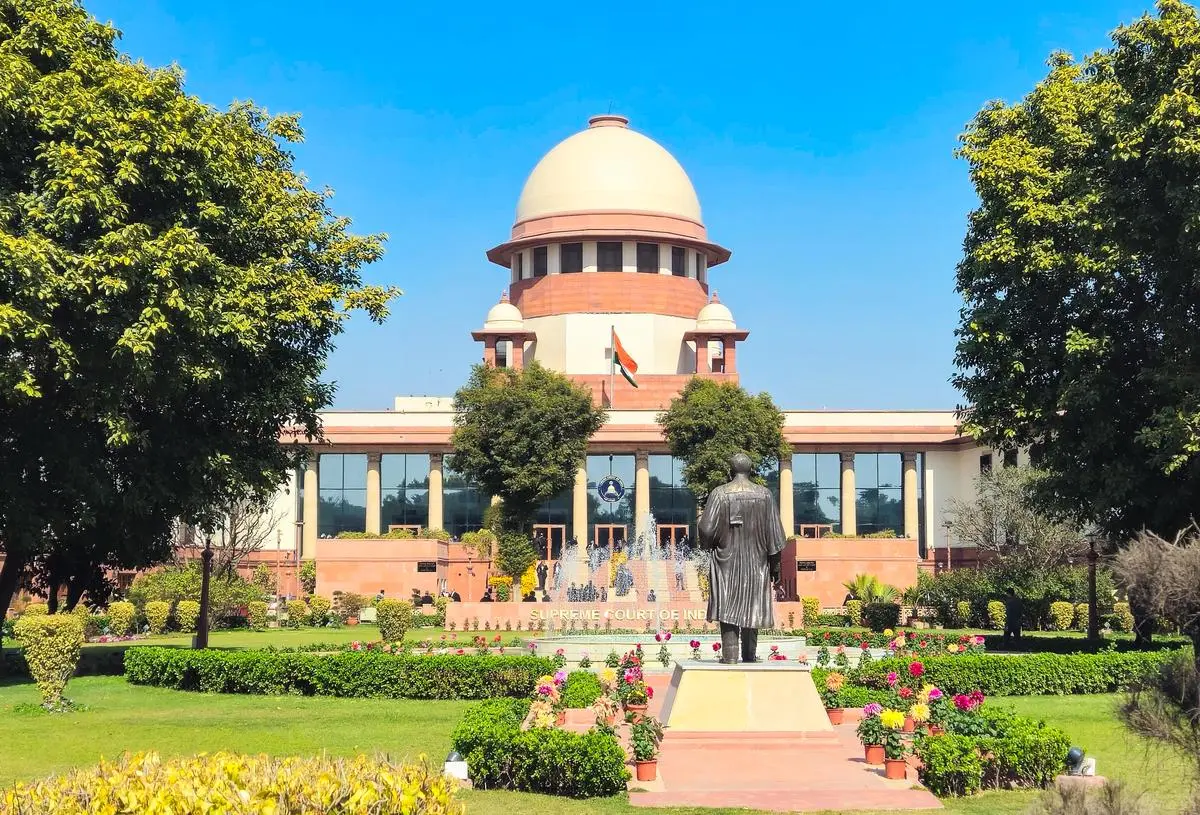
The Supreme Court has delivered a significant ruling in the ongoing dispute over bike taxi services in Karnataka, bringing major relief to ride-hailing platforms such as Ola, Uber and Rapido. On November 20, the apex court dismissed the Karnataka government’s appeal against a Karnataka High Court judgment that had paved the way for bike taxi operations under an appropriate regulatory framework.
The Supreme Court made it clear that banning bike taxi services altogether may not be the most appropriate solution. Instead, the government should establish a proper regulatory mechanism to ensure that these services operate within the legal framework. The decision is particularly important for thousands of commuters who depend on affordable and convenient transportation, as well as drivers associated with app-based mobility platforms.
However, the ruling does not mean that every motorcycle can automatically operate as a commercial bike taxi. Vehicle owners and aggregator companies will still have to fulfil the applicable registration, permit and regulatory requirements before providing passenger transportation services.
Supreme Court Highlights the Need for Regulation Instead of a Complete Ban
A two-judge bench comprising Justice N. Kotiswar Singh and Justice Satish Chandra Sharma considered the Karnataka government’s challenge to the High Court’s January 23 decision.
During the proceedings, Justice Sharma highlighted the growing importance of bike taxi services in India’s urban transportation system. He observed that regulating these services would be a more practical approach than imposing a blanket prohibition.
The court also noted that bike taxi services are already operating in 25 states across the country, indicating their growing acceptance as an alternative mode of transportation.
The bench highlighted affordability and passenger convenience as important considerations. Justice Sharma particularly referred to the preference of young women commuters, observing that women working in his office often choose bike taxis over auto-rickshaws because of their comparatively lower fares.
He also pointed towards technology-enabled safety features, including GPS tracking, which can help passengers monitor their journeys. These observations brought attention to the potential benefits of bike taxis while underlining the importance of an appropriate safety and regulatory framework.
The broader message from the court was that emerging transportation services should be governed through effective rules rather than discontinued without considering their public utility.
Karnataka Government’s Appeal Rejected, High Court Judgment Remains Effective
The Supreme Court dismissed the special leave petition filed by the Karnataka government challenging the High Court’s January 23 judgment.
The dispute originated in April 2025, when a single-judge bench of the Karnataka High Court directed the state government to stop bike taxi operations. The court had observed that companies such as Ola, Uber and Rapido could not operate motorcycle-based passenger services without the necessary guidelines being notified under the Motor Vehicles Act and related rules.
The government was initially directed to ensure that the services were discontinued within six weeks. The deadline was subsequently extended to June 15, 2025, meaning the operations were scheduled to stop from June 16.
However, bike taxi operators and ride-hailing companies challenged the decision before a division bench of the High Court.
On January 23, a bench comprising Chief Justice Vibhu Bakhru and Justice C.M. Joshi overturned the earlier order. It allowed motorcycle owners to approach the relevant transport authorities for commercial registration and the necessary permissions to operate their vehicles as contract passenger vehicles.
The Supreme Court’s latest decision leaves that High Court ruling undisturbed, providing legal relief to the companies and operators involved in the dispute.
FCRF Launches Certified Chief Risk Officer (CRO) Program for India’s Risk Leaders
Vehicle Registration and Permits Remain Mandatory for Operators
One of the most important aspects of the judgment concerns the legal requirements for operating motorcycles as commercial passenger vehicles.
Under the High Court’s directions, motorcycle owners can apply to register their vehicles as transport vehicles and seek permission to operate them as contract passenger vehicles.
The concerned state authorities and transport departments are required to examine these applications according to the applicable laws and regulations.
The High Court had also clarified that applications should not be rejected merely on the assumption that motorcycles cannot be registered as transport vehicles or used for contract passenger transportation.
Additionally, Section 74(2) of the Motor Vehicles Act, 1988, provides a regulatory framework under which regional transport authorities can impose appropriate conditions on contract carriage permits.
This gives transport authorities the scope to establish operational requirements for bike taxi services while ensuring compliance with existing legal provisions. Aggregator companies have also been allowed to submit fresh applications for the necessary approvals.
Therefore, the Supreme Court’s decision should not be interpreted as unrestricted permission for all bike taxi operators. Individual vehicle owners and companies must still secure the required registrations, permits and approvals.
Companies Defended Bike Taxis, Citing the Right to Conduct Business
During the legal proceedings, Ola, Uber, Rapido and other aggregator companies challenged the restrictions, arguing that a complete ban affected their fundamental right to carry out business.
The companies maintained that the state government could introduce reasonable safety standards, traffic regulations and licensing conditions instead of shutting down an entire transportation service.
They also argued that existing legal provisions provided mechanisms for registering commercial vehicles and granting permits, making a blanket prohibition unnecessary.
The Karnataka government opposed this position, maintaining that motorcycles could not be treated as transport vehicles carrying passengers for hire or reward under its interpretation of the applicable legal framework. It also referred to its authority to regulate passenger and goods transportation through permits and other regulatory measures.
The Supreme Court’s November 20 decision marks an important development for app-based mobility services in Karnataka. It reinforces the need to balance passenger safety, regulatory compliance, affordable transportation and the interests of businesses operating in the sector.
For commuters, the ruling offers the prospect of continued access to relatively economical short-distance travel. For drivers and aggregator companies, it provides an opportunity to operate within a legally recognised regulatory framework. However, the long-term continuation and expansion of these services will depend on compliance with registration requirements, permits and conditions imposed by the transport authorities.

