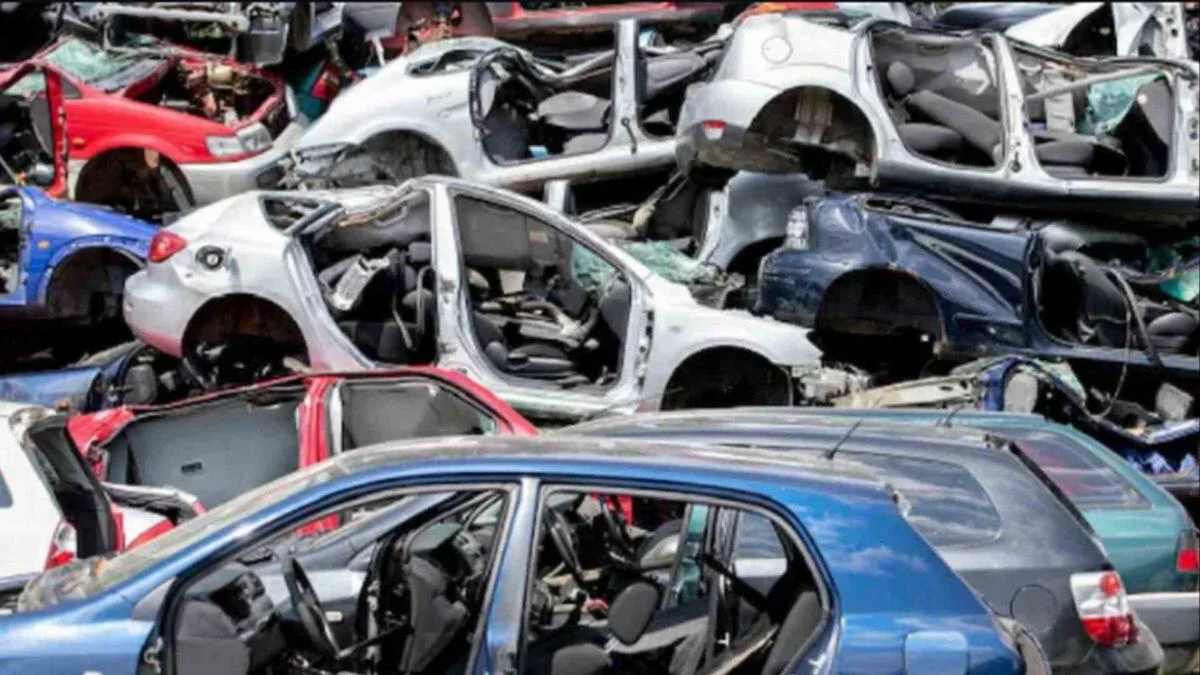
The central government has revised India’s vehicle scrappage rules, providing significant financial relief to automobile manufacturers that continue operating in the country. Under the amended framework, companies will not be required to recognise estimated future recycling and scrappage costs of vehicles already sold as financial liabilities on their balance sheets. This obligation will apply only to manufacturers that permanently shut down their businesses.
The decision has eased concerns over a potential financial burden of around ₹25,000 crore on the automobile industry.
The Ministry of Environment, Forest and Climate Change issued a notification on November 20, amending the Environment Protection (End-of-Life Vehicles) Rules, 2025. The amendment clarifies that the responsibility under Rule 4(6) will become applicable only when a vehicle manufacturer permanently ceases its business operations in India.
The change addresses concerns raised by automakers over the possible interaction between the vehicle scrappage rules and the accounting standard Ind AS 37. Companies had feared that they might have to estimate the future cost of recycling and scrapping vehicles sold over several years and record the amount as a present financial liability.
Such provisions could have significantly affected their reported profits, cash flows and balance sheets.
Potential Financial Impact Estimated at ₹25,000 Crore
The Society of Indian Automobile Manufacturers (SIAM), the automobile industry’s representative body, had written to the environment ministry during the first half of the year, raising concerns about the financial implications of the rules.
SIAM argued that if the Central Pollution Control Board (CPCB) notified environmental compensation rates, manufacturers could face substantial financial provisioning requirements under Ind AS 37.
According to the industry’s initial assessment, the proposed arrangement could have resulted in a one-time gross financial impact of approximately ₹25,000 crore during the financial year 2025-26. After considering exemptions, the estimated impact was around ₹9,000 crore.
The industry’s concern was that manufacturers might have to calculate future recycling obligations based on vehicles sold over the previous 15 to 20 years and recognise the estimated expenditure in their current financial statements.
The revised notification removes this immediate accounting burden for companies that continue their operations in India.
Recycling Liability Will Apply When a Company Permanently Shuts Down
The amended rules also explain how responsibilities will be determined if a vehicle manufacturer permanently closes its business.
In such a situation, the company will have to submit details of vehicles introduced into the market during a specified period to the Central Pollution Control Board.
For transport vehicles, the information will cover the previous 15 years, while for non-transport vehicles, it will cover the previous 20 years.
The CPCB will then assess the company’s Extended Producer Responsibility (EPR) obligations and determine its outstanding liabilities up to the date of business closure.
The manufacturer will be required to estimate the expenditure necessary to fulfil these pending obligations. This will include the cost of purchasing EPR certificates, where applicable. The estimated amount must then be recognised as a liability or financial provision in the company’s balance sheet.
This means manufacturers continuing their operations will not have to set aside thousands of crores immediately for the future recycling of vehicles sold in earlier years. However, companies that permanently shut down will remain responsible for the assessment and settlement of their outstanding obligations.
FCRF Launches Certified Chief Risk Officer (CRO) Program for India’s Risk Leaders
Automakers Can Meet Scrappage Targets by Purchasing EPR Certificates
India’s vehicle scrappage rules came into effect on April 1, 2025. Their primary objective is to ensure that vehicles reaching the end of their useful life are dismantled and recycled in an environmentally responsible manner.
Under the framework, automobile manufacturers must fulfil annual scrappage-related targets based on the number of vehicles they introduced into the market approximately 15 to 20 years earlier.
Manufacturers have the option of purchasing Extended Producer Responsibility certificates from registered vehicle scrapping facilities to meet these targets.
A centralised online portal has been established for this mechanism. Registered scrapping centres issue certificates based on the weight of steel recovered after vehicles are dismantled. Automakers can purchase these certificates to fulfil their EPR obligations without having to scrap old vehicles themselves.
The cost of purchasing these certificates forms part of the estimated expenditure involved in meeting a manufacturer’s EPR responsibilities.
Government Clarifies Financial Obligations While Retaining Environmental Goals
The latest amendment provides greater clarity on the financial responsibilities of vehicle manufacturers under India’s end-of-life vehicle framework.
By limiting the requirement to recognise estimated future scrappage liabilities to companies that permanently cease operations, the government has addressed a major concern raised by the automobile industry.
At the same time, the broader objective of ensuring environmentally responsible vehicle disposal and recycling remains in place. Manufacturers will continue to be subject to the applicable EPR requirements, while the revised provision clarifies when future financial liabilities must be recognised.