

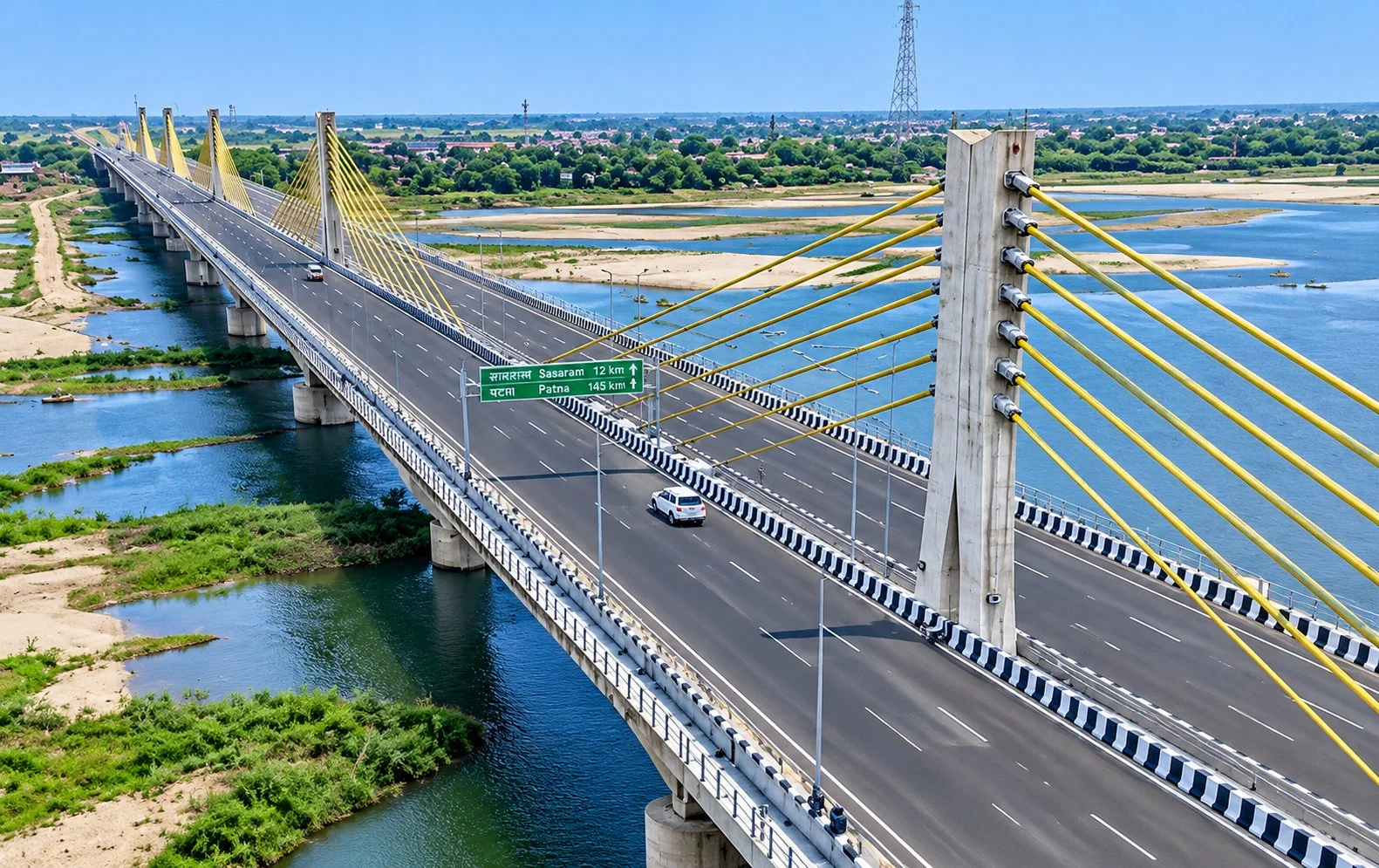
Bihar is preparing for a major infrastructure milestone with the completion of the much-awaited Kachchi Dargah-Bidupur six-lane bridge, popularly known as Nitish Setu. Prime Minister Narendra Modi is scheduled to inaugurate the Rupees 5,571.69-crore project on November 21, 2026. Built across the River Ganga, the bridge is expected to strengthen road connectivity between north and south Bihar and provide a faster alternative for commuters and commercial vehicles travelling between Patna and surrounding districts.
The project is significant not only because of its scale but also because of its potential economic impact. By improving access to markets, reducing travel delays and creating opportunities for businesses, Nitish Setu could play an important role in Bihar’s long-term infrastructure and development plans.
A Major Bridge Project with a Long Development Journey
The idea of constructing a modern six-lane bridge between Kachchi Dargah and Bidupur dates back to 2012. The project was conceived to improve connectivity across the Ganga and provide an additional route between Patna and north Bihar.
In September 2012, the Infrastructure Development Authority (IDA) granted in-principle approval to the proposal. The planning process gained momentum in February 2013 with the appointment of a transaction adviser and instructions to the Bihar State Road Development Corporation Limited (BSRDCL) to prepare a feasibility report.
The proposed bridge alignment was presented before then Chief Minister Nitish Kumar in June 2013. In August 2014, the Centre recommended financial assistance from the Asian Development Bank (ADB), opening the way for international funding support.
The Union Ministry of Road Transport and Highways issued a No Objection Certificate in December 2014. Further discussions on construction took place in March 2015. The Bihar government granted administrative approval in July 2015 and invited international tenders. Construction subsequently moved forward following the selection of the agency and the signing of the agreement.
Rupees 5,571 Crore Investment and Six-Lane Infrastructure
The total cost of the project is Rupees 5,571.69 crore. According to the project details provided, the Asian Development Bank contributed Rupees 3,472.15 crore in loan assistance, while the Bihar government provided Rupees 2,099.54 crore as its share.
The bridge has been constructed under the Engineering, Procurement and Construction (EPC) model. This approach brings engineering, procurement and construction responsibilities under a defined project arrangement.
Its six-lane design is intended to accommodate a substantial volume of traffic and improve the movement of both passenger and goods vehicles. The bridge will establish a direct road connection between Kachchi Dargah in Patna district and Bidupur in Vaishali district, strengthening an important transport corridor across the Ganga.
Reduced Traffic Congestion and Easier Travel
One of the major expected benefits of Nitish Setu is the reduction of traffic pressure on the Mahatma Gandhi Setu, a crucial connection between Patna and north Bihar. With another major crossing available, vehicles travelling between the two regions will have an alternative route.
The new connection is expected to make journeys more convenient for people travelling to Patna for work, education, healthcare, business and administrative purposes. Commercial transport operators may also benefit from smoother movement of goods, potentially reducing delays and fuel consumption.
Better connectivity could improve access between villages, towns and urban markets, helping residents of surrounding areas connect more easily with the state capital.
Agriculture, Trade and Employment May Receive a Boost
The bridge’s economic importance extends beyond faster travel. North Bihar is a major producer of agricultural commodities such as litchi, bananas, maize and vegetables. Improved road connectivity could help farmers and traders transport perishable produce to Patna and other markets more efficiently.
The Kachchi Dargah-Bidupur corridor may also become more attractive for industrial investment, warehousing, logistics facilities and commercial activities. Better transport infrastructure can support businesses by improving the movement of raw materials and finished products.
These developments could create employment opportunities in transportation, logistics, retail, construction-related services and other sectors. However, the scale of these benefits will depend on supporting infrastructure, investment and effective regional planning.
With its potential to improve mobility, strengthen trade links and support economic activity, Nitish Setu represents a major addition to Bihar’s road network. Its scheduled inauguration on November 21, 2026, is expected to mark an important milestone in the state’s infrastructure development.

