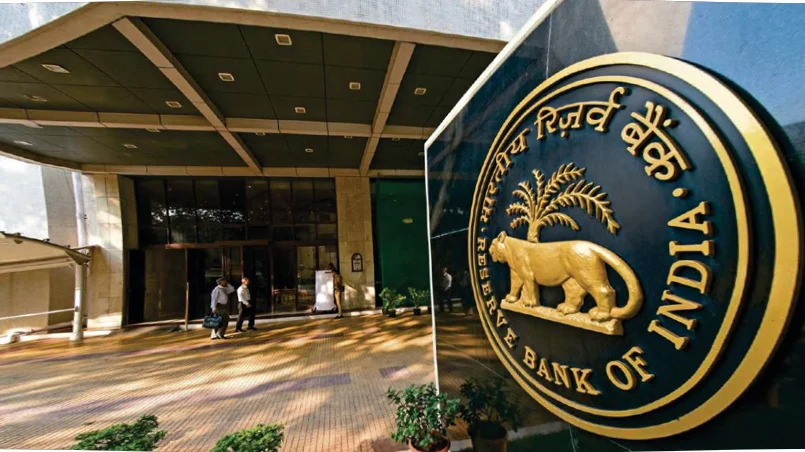
The Reserve Bank of India (RBI) has urged banks, small finance banks and non-banking financial companies (NBFCs) to strengthen their digital security systems amid growing concerns over cyberattacks targeting financial institutions and banking transactions. The central bank has placed particular emphasis on securing Application Programming Interfaces (APIs), monitoring fund transfers and addressing vulnerabilities in third-party technology systems.
The advisory comes against the backdrop of incidents in which cybercriminals allegedly exploited weaknesses in financial institutions’ systems or those of their technology partners to divert money into fraudulent accounts. In some cases, loan disbursement amounts were reportedly redirected after beneficiary bank account details were manipulated.
Through its latest guidance, the RBI wants regulated entities to move beyond basic cybersecurity measures and establish stronger mechanisms to identify suspicious activity, authenticate transaction requests and prevent unauthorised movement of funds.
RBI Highlights Risks Associated With API-Based Transactions
On November 16, the RBI issued an advisory outlining security and operational controls for APIs, with particular attention to API-enabled fund transfers. The regulator has also been communicating its cybersecurity expectations through regular discussions with regulated financial institutions, extending these interactions to NBFCs.
APIs allow different software systems to communicate and exchange information. In the banking sector, they are widely used to facilitate digital payments, loan disbursements and other financial services. However, weaknesses in API authentication, access controls or connected systems can create opportunities for cybercriminals.
According to senior banking officials, the RBI has been consistently encouraging financial institutions to review their cybersecurity arrangements and identify potential vulnerabilities before they are exploited. The regulator’s approach focuses not only on responding to cyber incidents but also on preventing them through stronger safeguards.
Banks are expected to independently verify API-based transaction requests rather than automatically treating them as legitimate simply because they originate from a recognised business partner or service provider. They must establish whether a payment instruction has been issued by an authorised entity and whether the beneficiary details are accurate.
Third-Party Technology Systems Emerge as a Major Security Concern
One of the key concerns highlighted by the RBI is the possibility of cybercriminals exploiting vulnerabilities in third-party systems connected to banks and NBFCs. Financial institutions increasingly depend on external service providers, technology partners and digital platforms to deliver services. A security weakness in any one of these connected systems can potentially expose other organisations to cyber risks.
Such incidents are commonly associated with supply-chain attacks. In these attacks, criminals target a service provider or business partner to gain access to systems connected to a larger network.
In certain reported cases, attackers allegedly manipulated beneficiary account information in loan disbursement systems. As a result, loan amounts that were intended for genuine borrowers could be transferred to accounts controlled by fraudsters.
The RBI’s guidance stresses that banks should not rely solely on the security assurances of their partners. They must establish independent verification procedures and regularly assess the security arrangements of third-party service providers.
The regulator is particularly concerned about vulnerabilities in loan disbursement channels and direct API-based fund transfers, as both can be exploited to redirect money if appropriate checks are not in place.
FCRF Launches Certified Chief Risk Officer (CRO) Program for India’s Risk Leaders
Transaction Monitoring, Encryption and Account Verification in Focus
The RBI has recommended several safeguards to reduce the risk of unauthorised transactions through APIs. These include transaction velocity checks, limits on the number of API requests, whitelisting, data encryption and regular verification of beneficiary accounts.
Transaction velocity checks help banks identify unusual patterns by monitoring the number and frequency of transactions within a specified period. For instance, if an API suddenly generates an unusually high number of payment requests, the bank can investigate the activity or temporarily restrict further requests.
Rate limiting and throttling mechanisms can also prevent a system from sending excessive payment requests within a short period. Such controls can help reduce the possibility of automated attacks and suspicious fund transfers.
Financial institutions have also been advised to periodically rotate security keys used for API authentication. Regular reconciliation of transactions and advance verification of beneficiary accounts can further help identify discrepancies before funds are transferred.
Banks are expected to review the limits placed on API-enabled transactions, including the number of transfers permitted within a specific period and the overall transaction volume. These checks are intended to ensure that unusual activity does not go unnoticed.
Six-Hour Reporting Requirement for Certain Cyber Incidents
Apart from strengthening API security, the RBI is focusing on third-party risk management, data protection and preparedness for cyber incidents. Regulated financial institutions are expected to assess their cybersecurity risks in advance and maintain clear procedures for responding to potential attacks.
Certain categories of cyber incidents must be reported to the RBI within six hours. Financial institutions are also expected to strengthen internal monitoring, identify the root causes of security breaches and take corrective measures to prevent similar incidents.
Where necessary, forensic investigations may be required to understand how an attack occurred, what systems were affected and whether sensitive information or funds were compromised.
Restoring affected systems and ensuring the continuity of banking operations are also important elements of cybersecurity preparedness. The regulator wants financial institutions to develop response mechanisms that allow them to recover quickly from cyber incidents while protecting customers and maintaining essential services.
The RBI’s latest push comes at a time when banks and NBFCs are becoming increasingly dependent on APIs, digital platforms and external technology providers. While these systems improve the speed and convenience of financial services, they also create interconnected security risks.
The central bank’s message is clear: financial institutions must strengthen every layer of their digital infrastructure, independently verify transactions and ensure that vulnerabilities in third-party systems do not become entry points for cybercriminals.