

Agriculture has been one of the most important pillars of the Indian economy, providing livelihoods to millions of people and playing a crucial role in ensuring food security. However, farmers continue to face several challenges, including unpredictable rainfall, rising cultivation costs, water shortages, pest attacks, soil degradation and fluctuating market prices. These problems have increased the need for modern agricultural practices that can improve efficiency and reduce uncertainty.
Smart farming is emerging as a promising approach to address these challenges. It involves using technologies such as artificial intelligence (AI), agricultural drones, satellite imagery, sensors, mobile applications and data analytics to make farming more efficient and informed. Instead of depending entirely on traditional methods, farmers can use real-time information and digital tools to understand crop requirements and make better decisions.
As India moves towards technology-driven development, smart farming could play an important role in strengthening rural economies, improving agricultural productivity and creating new opportunities for farming communities.
Agricultural Drones: Making Farming More Efficient and Precise
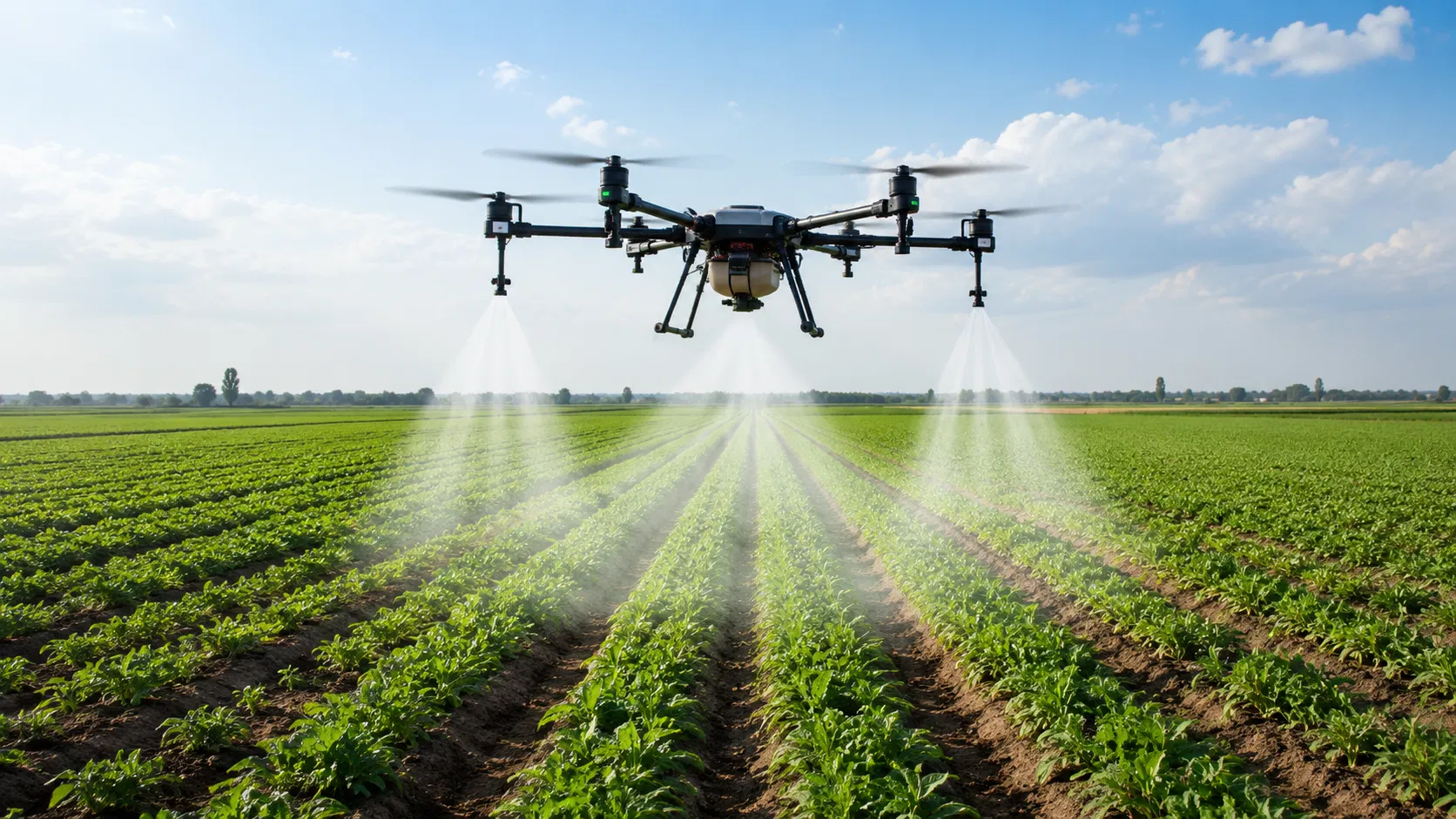
Agricultural drones are becoming an important part of modern farming. Equipped with high-resolution cameras, sensors and specialised spraying systems, these unmanned aerial vehicles help farmers monitor agricultural fields and identify problems that may not be easily visible from the ground.
One of the major advantages of drones is crop monitoring. Aerial images can help identify areas affected by pest attacks, diseases, water shortages and uneven plant growth. Early identification allows farmers to take corrective measures before problems spread across larger portions of their fields.
Drones can also be used for spraying pesticides, fertilisers and other agricultural inputs. Compared with certain conventional spraying methods, drone-based applications can cover selected areas quickly and reduce direct human exposure to chemicals when operated with proper safety precautions.
The Indian government is also encouraging drone adoption through initiatives such as the Namo Drone Didi Scheme, which aims to provide 15,000 drones to selected women Self-Help Groups (SHGs). The initiative seeks to create rural livelihood opportunities by enabling women to offer agricultural drone services to farmers.
However, equipment costs, maintenance, technical training and access to drone services remain important challenges, particularly for small and marginal farmers.
Artificial Intelligence: Helping Farmers Make Better Decisions
Artificial intelligence is creating new possibilities for agricultural planning and crop management. AI-powered systems can analyse information collected through cameras, sensors, satellites and weather databases to help farmers understand field conditions and identify potential risks.
One important application is crop disease detection. AI-based image recognition systems can examine photographs of leaves and plants to identify possible signs of infections, pest attacks or nutrient deficiencies. Timely identification can help farmers seek expert advice and take preventive action.
AI-based weather forecasting and predictive tools can also support agricultural planning. By analysing weather patterns and historical information, these systems can provide insights into rainfall, temperature changes and potential crop-related risks. Farmers can use such information to plan sowing, irrigation and harvesting activities more effectively.
Another important application is precision farming. Instead of applying equal quantities of water and fertilisers throughout a field, data-based systems can help identify areas that require additional attention. This approach can reduce unnecessary input usage, improve resource management and support environmentally responsible cultivation.
However, AI recommendations must be supported by reliable data and local agricultural knowledge. Soil conditions, crop varieties and regional weather patterns can influence the accuracy of digital predictions.
Digital Technology: Connecting Farmers With Information and Markets
Digital technology is changing how farmers access agricultural information, government services and market opportunities. Smartphones, mobile applications and online platforms can provide information about weather forecasts, soil health, crop prices, government schemes and modern cultivation techniques.
Digital advisory services can help farmers understand suitable sowing periods, irrigation requirements, pest management and harvesting schedules. These services are particularly useful in areas where access to agricultural experts is limited.
The Government of India approved the Digital Agriculture Mission in September 2024 with an allocation of ₹2,817 crore. The initiative aims to develop a digital ecosystem for agriculture through components such as AgriStack, digital crop surveys and the Krishi Decision Support System. These platforms are intended to improve access to agricultural data and support informed decision-making.
Digital platforms can also help farmers compare market prices, understand demand and connect with potential buyers. Access to timely market information can improve transparency and help farmers make better decisions about when and where to sell their produce.
Challenges and the Future of Smart Farming in India
Despite its potential, smart farming faces several challenges in India. The high cost of drones, sensors, advanced machinery and digital equipment can make adoption difficult for small and marginal farmers. Limited digital literacy, unreliable internet connectivity in certain rural areas and a shortage of trained operators can further slow the process.
Making technology affordable and accessible is therefore essential. Agricultural equipment rental centres, cooperative farming services, local-language mobile applications and practical training programmes can encourage wider adoption. Institutions such as Krishi Vigyan Kendras can also help farmers understand and use modern agricultural tools.
Government support, agricultural research and private-sector innovation will play important roles in expanding technology-based farming. Equally important is ensuring that traditional agricultural knowledge is combined with modern scientific methods rather than being completely replaced.
Conclusion: Smart farming has the potential to transform Indian agriculture by improving crop monitoring, supporting better decisions and connecting farmers with useful information and markets. Drones, artificial intelligence and digital platforms can help make agricultural operations more efficient and sustainable. However, the real success of this transformation will depend on affordability, accessibility and proper training. By bringing modern technology within the reach of small and large farmers alike, India can move towards a more productive, climate-resilient and economically stronger agricultural future.

