
A startling revelation linked to offerings at the sacred Vaishno Devi Temple has raised serious concerns among devotees and authorities alike.An investigation has found that silver jewellery and coins offered by devotees—believed to be worth Rs 500–550 crore—may largely be fake, drastically reducing the actual value to around Rs 30 crore.
Government Mint Investigation Uncovers Truth
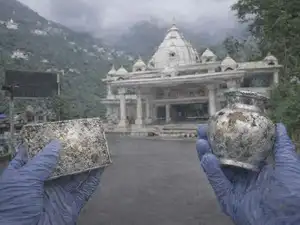
The India Government Mint was tasked with examining nearly 20 tonnes of “silver” offerings sent by the Shrine Board for melting and secure storage.
What officials discovered was shocking:
Only 5–6% of the material turned out to be real silver.
In practical terms, from a 70 kg batch, only about 3 kg was pure silver, exposing a massive gap between perceived and actual value.
Toxic Cadmium Found in Fake Offerings
Beyond the financial loss, the investigation revealed a far more dangerous aspect — the presence of cadmium, a highly toxic heavy metal.Officials found that many of the fake jewellery items were made using iron mixed with cadmium, posing serious health risks.
When heated during the melting process, cadmium releases toxic fumes that can:
●Damage lungs and kidneys
●Increase long-term cancer risk
Due to these dangers, mint workers initially refused to process the material.
Special Safety Measures Required
To safely handle the toxic material, the mint had to install special sensors and safety equipment worth Rs 25 lakh.Only after these precautions were implemented could the separation and melting process be carried out without risking workers’ health.
Localized Racket Suspected Around Katra Route
The investigation suggests that this issue may not be widespread across all major temples.Reports indicate that such adulteration has not been observed in offerings at temples like Tirupati or Siddhivinayak, pointing toward a possible localized racket operating around Katra and the Vaishno Devi pilgrimage route.
Faith Exploited: A Serious Concern
This case highlights not just a financial scam but a breach of faith, where devotees unknowingly offered items believed to be pure silver.
●It raises critical questions about:
●Supply chains of religious offerings
●Lack of verification mechanisms
●Exploitation of religious sentiments for profit
The Bigger Question
When offerings made with devotion turn out to be fake and even hazardous, it shifts the issue from mere fraud to a matter of public trust and safety.Authorities are now expected to examine how such materials entered the system and whether stricter checks can prevent similar incidents in the future.