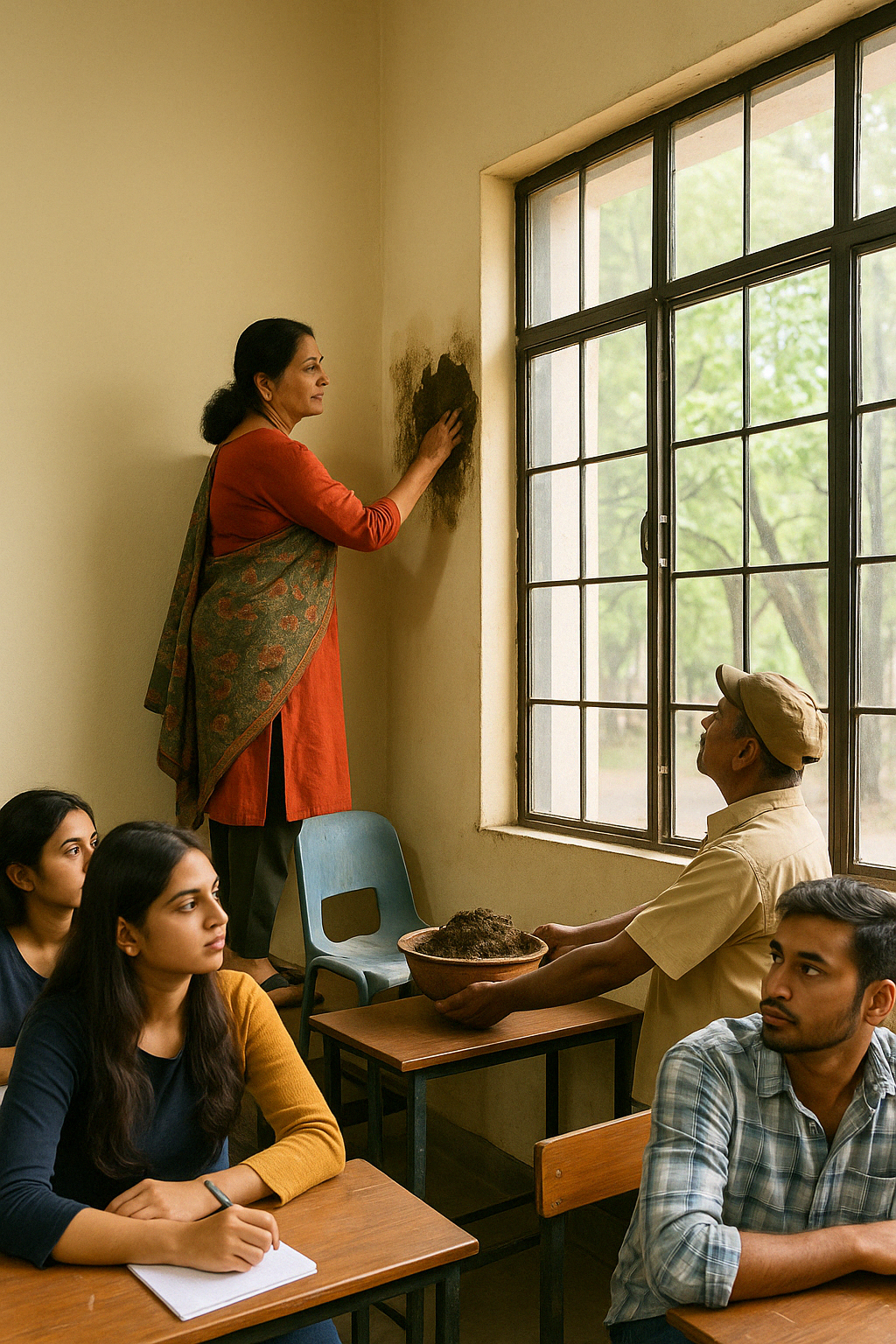
A video from Laxmibai College, Delhi University, recently went viral showing Principal Dr. Pratyush Vatsala applying cow dung to a classroom wall. While some viewers mocked the act, others saw merit in it. The moment drew attention to a centuries-old Indian practice—now resurfacing in a new, sustainable light.
So, what’s the science behind using cow dung for cooling homes? And why are modern architects and environmentalists reintroducing it into urban spaces?
Traditional Material, Proven Science
For generations, rural India used cow dung to coat walls and floors. This wasn’t just cultural—it was practical.
Cow dung:
- Acts as a natural insulator, keeping interiors cooler in summer and warmer in winter
- Reduces dust and absorbs moisture
- Contains antimicrobial properties, which help keep homes hygienic
- Is affordable, widely available, and biodegradable
Despite being labelled as “backward,” the effectiveness of this method remains undisputed, especially in hot, humid, or dry climates.
Dr. Shivdarshan Malik: Blending Tradition with Innovation
One of the most prominent voices behind cow dung revival is Dr. Shivdarshan Malik, a former professor and civil engineering expert. His innovations include:
🧱 Vedic Plaster
A breathable mixture made from:
- Cow dung
- Clay
- Neem leaves
- Gypsum
- Other natural additives
This mix reduces indoor temperatures by up to 7°C, making rooms cooler without air conditioning.
Gocrete Bricks
Bricks made with:
- Cow dung
- Locally sourced soil and plant materials
They can block up to 70% of external heat, unlike conventional cement which traps and radiates heat.
“Villagers gave up on cow dung, but it worked better than most modern solutions,” says Dr. Malik.
His mission is not nostalgia — it’s sustainability, backed by data.
How Cow Dung Helps Regulate Indoor Temperature
- Doesn’t Store Heat: Cow dung-coated walls absorb less heat during the day.
- Retains Moisture: Releases moisture slowly, creating a natural cooling effect.
- Acts as a Binder: Mixed with mud, it creates a strong, crack-resistant surface.
- Antimicrobial: Prevents pathogen growth, making it ideal for rural and urban spaces alike.
- Reduces Electricity Bills: One user saved Rs 8,000/month by eliminating the need for AC after applying Vedic Plaster.
Real-Life Applications Across India
Sudhakar & Noushadya (Tamil Nadu)
- Built a home using mud, cow dung, and recycled materials
- Used lime whitewash instead of paint
- Emphasized low carbon footprint in construction
Kiran Amati (Mumbai)
- Constructed a circular studio home with:
- Cow dung
- Straw
- Wood and lime
- Includes a dry septic tank with natural waste management
These examples show how urban and rural residents alike are turning to cow dung to build cooler, cleaner, and more sustainable homes.
Relevance in Today’s Climate Crisis
With rising temperatures and increasing energy consumption, cooling systems are becoming essential but also unsustainable. Cow dung-based construction:
- Offers an energy-efficient alternative
- Promotes circular use of natural materials
- Reduces dependence on air conditioning and artificial insulation
- Creates non-toxic living spaces with zero harmful emissions