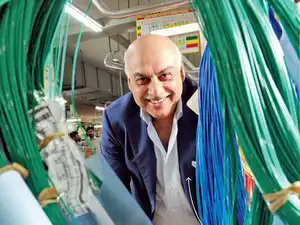
At a time when Noida’s industrial landscape is under the spotlight due to recent labour unrest, one name has once again captured national and global attention — Vivek Chaand Sehgal, the man behind one of India’s most successful manufacturing stories.
From humble beginnings with just one kilogram of silver to building a global auto components empire, Sehgal’s journey reflects ambition, adaptability, and relentless execution. Today, Motherson Sumi Systems Limited stands as a symbol of India’s industrial strength across continents.
A Small Beginning That Sparked a Big Vision
Born in Delhi in 1957 into a modest family, Sehgal did not inherit a business empire. His early journey began with trading silver — a small-scale venture started alongside his mother, Swarn Lata Sehgal.
With limited capital and resources, the business initially generated modest monthly earnings. But even in those early days, Sehgal displayed a sharp business instinct — recognising that scaling up was the only way forward.
In the early 1970s, he expanded the trading business, laying the foundation of what would later become the Motherson Group.
When Crisis Forced Reinvention
Success did not come without setbacks.
A downturn in the silver trade and the collapse of a major trading firm forced Sehgal to rethink his entire business strategy. Instead of holding on to a declining sector, he made a bold move — exiting the silver business altogether.
This decision marked a turning point.
He shifted focus to manufacturing, entering the automotive components sector — a move that would redefine his career.
The Breakthrough: Global Partnership and Rapid Expansion
The real transformation began when Sehgal partnered with Japan’s Sumitomo Electric, forming a joint venture that led to the creation of Motherson Sumi Systems.
This collaboration brought in global expertise, technology, and scale — enabling the company to grow beyond domestic boundaries.
From there, expansion was aggressive and strategic.
The company began supplying components to some of the world’s biggest automobile brands, including:
●BMW
●Mercedes-Benz
●Toyota
●Volkswagen
●Ford
What started in Noida soon turned into a global manufacturing network.
From Noida to the World: A Rs 1 Lakh Crore Empire
Today, the Motherson Group operates across multiple countries, with a massive global presence.
Annual revenue: Over Rs 1,05,000 crore
Workforce: Over 1.6 lakh employees globally
Presence: Multiple continents and markets
The company’s headquarters remains in Noida, making it one of India’s most prominent industrial success stories rooted in the region.
According to Forbes estimates, Sehgal’s net worth stands at nearly ₹38,000 crore, placing him among the leading industrialists of Indian origin globally.
A Business Built on Adaptability and Scale
What sets Sehgal apart is not just success — but his ability to adapt.
●He exited a failing industry at the right time
●Entered a high-growth sector early
●Leveraged global partnerships effectively
●Focused on acquisitions to scale rapidly
Over the years, Motherson has acquired multiple companies worldwide, strengthening its position as a key supplier in the global automotive supply chain.
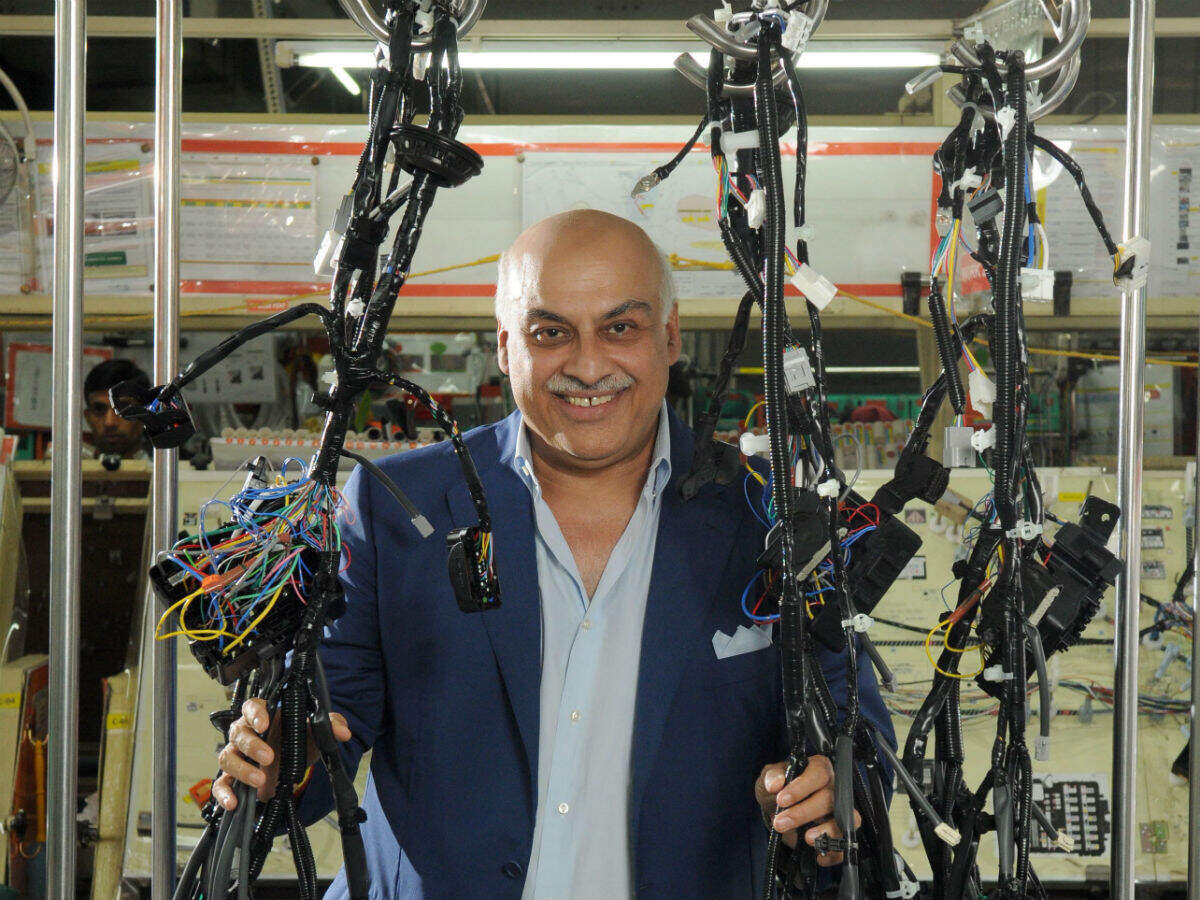
Employment Engine: Powering Thousands of Livelihoods
Beyond business success, the group has emerged as a major employment generator.
From a small room startup, it has grown into an organisation employing nearly two lakh people, directly and indirectly.
In Noida alone, the company operates multiple manufacturing units, playing a crucial role in the region’s industrial ecosystem.
Why Sehgal Is Trending Again
With recent labour unrest in Noida bringing industrial units into focus, interest around major companies and their leadership has surged.
Searches for Sehgal and Motherson have spiked, reflecting curiosity about the people and businesses driving the region’s economy.
His story, in this context, stands as a reminder of how industries are built — not overnight, but over decades of risk-taking and reinvention.
A Story Beyond Business Numbers
Sehgal’s journey is more than just financial success.
It represents:
●The rise of Indian manufacturing on the global stage
●The power of strategic pivots
●The impact of long-term vision
From trading silver in a small setup to supplying components to global automotive giants, the journey captures the essence of entrepreneurial evolution.